Gedeon Richter's Junod Enters EU Market with Approval
Transition from Development to Commercialization with EU Approval
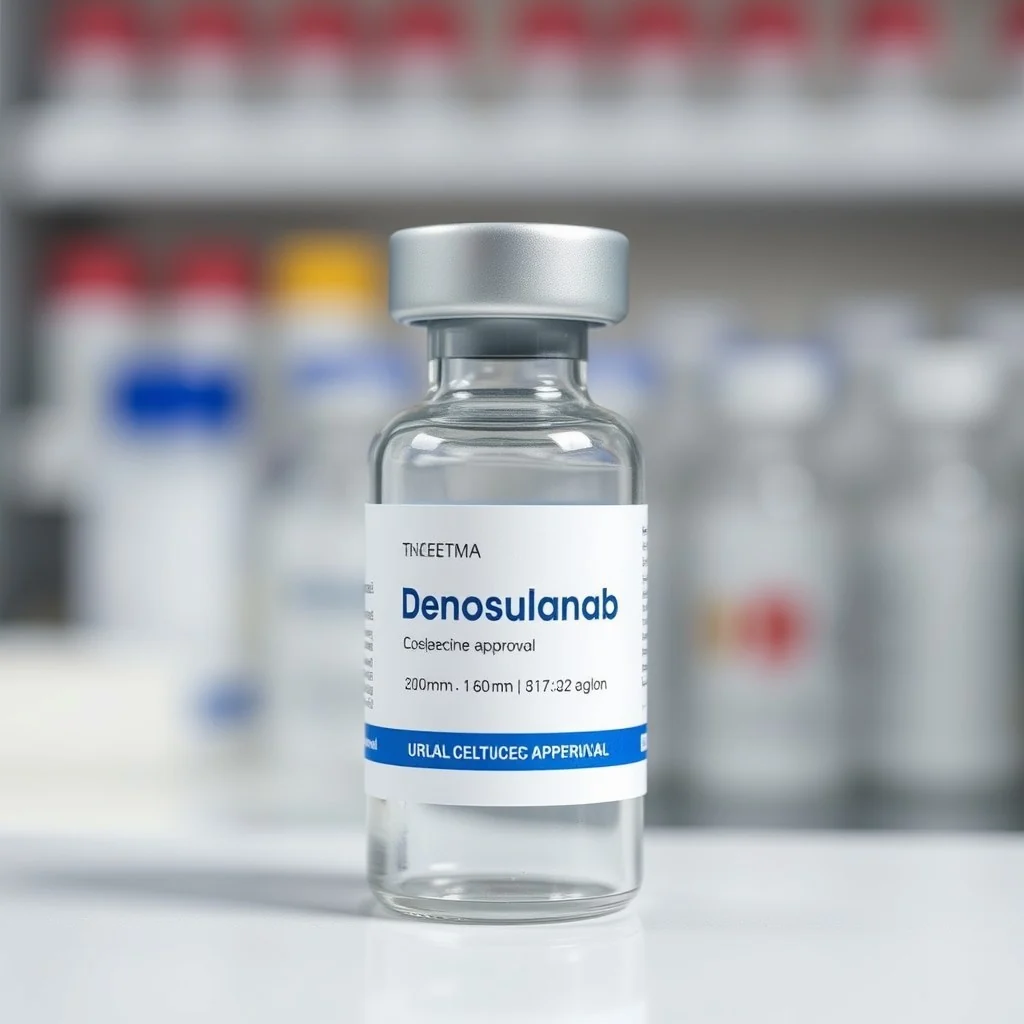
The European Commission approved Gedeon Richter's Junod (denosumab) on June 23, 2025. This followed the adoption of a positive opinion by the Committee for Medicinal Products for Human Use (CHMP) of the European Medicines Agency (EMA) on April 25, 2025. Junod is a biosimilar in the approval and commercialization phase, referencing Amgen's Prolia (denosumab). Regulatory authorities determined that Junod is highly similar to Prolia in structure, purity, biological activity, and distribution, and that it demonstrated equivalent safety and efficacy in comparative trials in postmenopausal women with osteoporosis.
RANKL Inhibition Mechanism and Approved Indications
Junod is a human IgG2 monoclonal antibody that inhibits RANKL, which promotes the formation, function, and survival of osteoclasts. It is administered subcutaneously at a dose of 60mg via a prefilled syringe every six months. Approved indications include osteoporosis in postmenopausal women and men at high risk of fracture, bone loss associated with hormone therapy for prostate cancer, and bone loss related to long-term systemic glucocorticoid treatment. Bisphosphonates such as alendronate and zoledronic acid, as well as Amgen and UCB's Evenity (romosozumab, sclerostin-targeting), are major standard treatment alternatives. It cannot be used in patients with hypocalcemia, and management of jaw osteonecrosis risk, along with calcium and vitamin D supplementation, is required. In practice, adoption rates will depend not only on price but also on dosing convenience and safety management capabilities.
Multilateral Competition for a Large Revenue Base
Prolia's global revenue in 2025 increased by 1% year-over-year to USD 4.414 billion, directly illustrating the commercial foundation Junod is targeting. However, Junod is not the first denosumab biosimilar in Europe; Sandoz's Jubbonti received EU approval on May 16, 2024, and Celltrion's Stoboclo on February 14, 2025. Therefore, the competitive axis has shifted from clinical differentiation to country-specific drug pricing, tenders, supply stability, and hospital transition policies. Amgen's RANKL antibody patents in some European countries expired in November 2025, and revenue erosion due to intensified competition is expected by 2026, creating conditions for rapid expansion of price competition among biosimilars.
Richter's Revenue Path and Key Indicators
This EU approval is more of a regulatory milestone for converting an internally developed and manufactured biosimilar into revenue, rather than a new clinical success event. In Europe, Richter will commercialize the product directly to secure revenue, while in the U.S., Hikma Pharmaceuticals will handle exclusive distribution under a regional strategy. The 2021 U.S. agreement between Richter and Hikma included upfront payments and development milestones totaling double-digit million USD, while royalty and equity investment terms were not disclosed. In EU investment assessments, the speed of launch in key countries such as Germany, the net price discount compared to Prolia, tender awards, and production utilization rates will determine revenue contribution.
Junod entered the EU approval and commercialization phase on June 23, 2025, following Phase 1 and 3 comparative development, and is now targeting the USD 4.414 billion Prolia market in 2025. In the short term, since Sandoz's Jubbonti and Celltrion's Stoboclo were approved earlier, competitive value will be determined by price, tender, and supply competition rather than first-mover premium. From a research perspective, the structural, functional, and pharmacokinetic equivalence of the RANKL-targeting denosumab and the equivalence in postmenopausal osteoporosis trials are key regulatory justifications. For the industry, this is an event that expands the accessibility of a six-monthly dosing biosimilar among existing treatment options, including bisphosphonates and Evenity. Medium- to long-term profitability will be determined by the balance between European direct sales margins, country-specific reimbursement conversion rates, and sequential price declines due to multiple biosimilar entries.
Source: EMA (ema)