CSL Opens €150 Million M600 R&D Campus in Marburg, Germany, to Establish a Bio Hub
Emil von Behring's Legacy and Evolution into a Global Pandemic Preparedness Hub
Marburg, Germany, boasts a rich history in biotechnology, dating back to the 1890s with Emil von Behring's Nobel Prize-winning research on diphtheria. Following the 1967 outbreak of Marburg virus, the city became a center for high-risk pathogen research and has since evolved into the Pharma & Life Science Park Marburg, home to over 7,200 bio professionals. Building on this historical foundation, CSL, an Australian global biopharmaceutical company, has opened its €40,000 m² M600 R&D campus to external tenants, transforming it into an Open Innovation hub. This signifies more than just individual company research facilities; it represents a strategic base for strengthening pandemic response capabilities across Europe.
The Value of €150 Million in Integrated Manufacturing Infrastructure
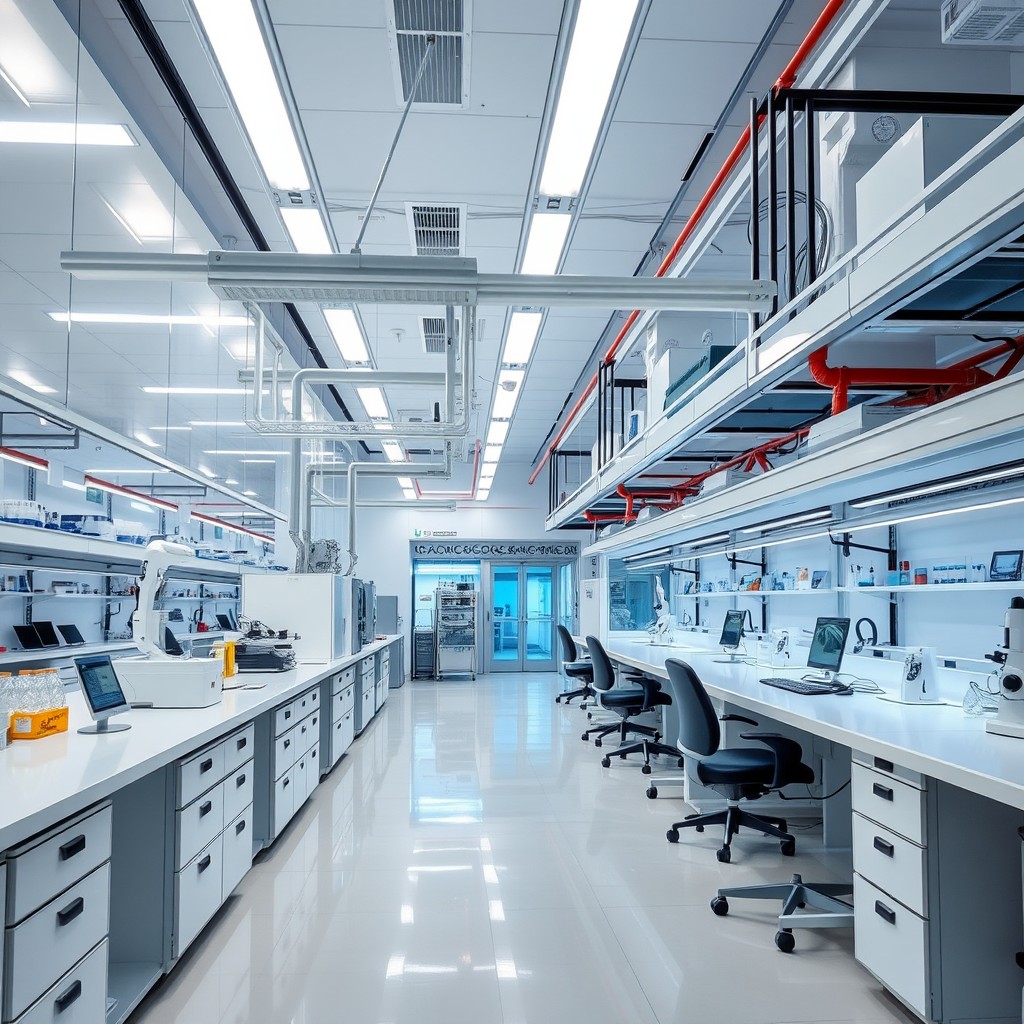
CSL invested approximately €150 million (approximately $170 million) in the M600 campus, which was completed in September 2022. It offers unique infrastructure, enabling everything from research to clinical-scale production in one location. With laboratories ranging from Biosafety Level 1 to Biosafety Level 3 (BSL-1 to BSL-3) and its own Pilot Plant, it supports the entire process, from the discovery of new drug candidates to GMP-compliant scale-up. This can significantly help biotech companies overcome the bottlenecks of securing manufacturing facilities and process development they face during commercialization. A physical ecosystem has now been established that minimizes early-stage uncertainties and dramatically reduces process transition costs.
Synergies Between National Investment and the European Vaccine Hub
The Marburg ecosystem, beyond M600, will create significant synergies with the Marburg Center for Pandemic Preparedness (MCEP), which is being developed with €46 million in funding from the German federal government and the state of Hesse, and is scheduled for completion by the end of 2026. This center will be the only university research facility with a Biosafety Level 4 (BSL-4) laboratory, dedicated to researching high-risk viruses for which there are currently no treatments. It is also a key partner in the European Vaccines Hub for Pandemic Readiness, which receives €170 million in funding from the European Union's Directorate-General for Health and Food Safety (DG HERA). This large-scale national and continental investment will be a powerful driver, organically linking basic research with M600's manufacturing capabilities to accelerate the development of immediate treatments.
A Next-Generation Cluster Model to Overcome the 'Valley of Death' in Bio Innovation
To overcome the 'Valley of Death' – the financial and technical barriers that biotech companies face when entering clinical trials – a close feedback loop between research and manufacturing is essential. The M600 campus is carefully designed to house CROs, CDMOs, academia, and startups in one location, allowing them to share knowledge and resources. With immediate Technology Transfer and process optimization occurring on-site, new drug development cycles can be significantly shortened. This can be interpreted as a strategic move to secure Europe's own bio supply chain and independence, countering the dominance of North American-centric bio clusters.
The multi-tenant transition of the M600 campus offers short-term benefits by alleviating the capital expenditure (CAPEX) burden for early-stage biotech companies with limited capital, accelerating their entry into Phase 1/2 clinical trials. In the medium to long term, it will add flexibility to an ecosystem dominated by large companies such as Lonza and Samsung Biologics, as the global biopharmaceutical CDMO market is expected to grow to a maximum of $29 billion by 2026. The close integration of pilot-scale research facilities with the GMP large-scale production facilities of global pharmaceutical companies will serve as a model for overcoming bottlenecks in moving from basic research to commercialization. In particular, the R&D partnership with Philipps University of Marburg, which has a Biosafety Level 4 (BSL-4) pandemic preparedness center, will lead to the acquisition of next-generation vaccine technologies and an increase in the value of new drug pipelines.
Source: Labiotech (rss)
https://www.labiotech.eu/partner/m600-marburg-biotech-innovation-europe/