Ankara City Hospital Successfully Completes Clinical Study on Activating Autologous Mesenchymal Stem Cells by Removing Fat Pad During Knee Surgery
Background and Objectives
The orthopedic research team at Ankara City Hospital Bilkent in Turkey has completed a study analyzing whether mechanically removing the infrapatellar fat pad (IPFP) during knee arthroscopic surgery induces immediate migration and activation of autologous mesenchymal stem cells (MSCs) within the joint. Existing stem cell therapies require ex vivo culture or allogeneic cell injection, which pose challenges due to high costs and complex regulatory procedures. This study, which aims to overcome the limitations of cell therapy by utilizing local adipose tissue already present in the patient's body, is attracting attention in the regenerative medicine field.
Study Design and Patient Recruitment
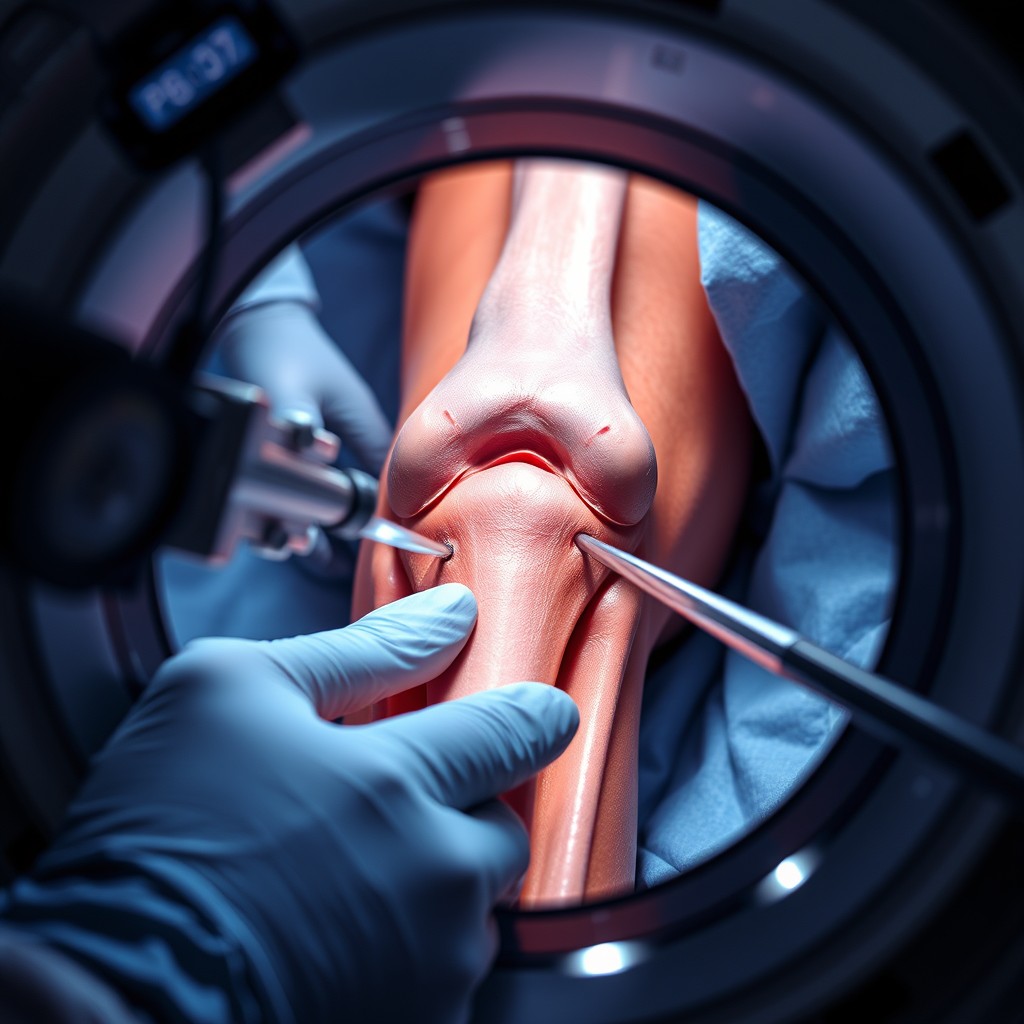
The research team conducted a single-arm, prospective clinical laboratory study (NCT07736716) on 26 adult patients aged 18-55 with meniscal tears and acute or chronic knee pain who were scheduled for arthroscopic surgery between January 9, 2024, and January 10, 2025. During the surgery, the first joint fluid sample was collected without disturbing any structures, and then the infrapatellar fat pad was finely resected for approximately 1 minute using a motorized shaver with the suction function turned off. Immediately afterward, the second joint fluid sample was aspirated, and a precise paired-sample design was applied to compare the number of cells with specific immune phenotypes and changes in molecular biological gene expression between the two time points.
Results of Immune Phenotype Analysis
The researchers measured changes in the number of cells positive for CD29, CD73, CD13, CD105, and CD90, and negative for LIN and CD31, which are standard markers for mesenchymal stem cells, using flow cytometry. The key finding is the quantitative confirmation of the mechanism by which cells in the fat pad are spontaneously released into the joint environment through mechanical stimulation. This provides molecular evidence that regenerative cells can be recruited through physical stimulation during surgery without the need for expensive ex vivo processing.
Molecular Biological Markers and Clinical Significance
In addition to cell migration, the expression of the genes for IL-1β (interleukin-1 beta), IL-6, IL-10, TGF-β (transforming growth factor beta), and CD24, which are inflammatory cytokines and anti-inflammatory/tissue regeneration-related factors, was precisely analyzed using real-time polymerase chain reaction (qPCR). The genetic expression changes observed immediately after surgery suggest that the microenvironment within the joint was reconstructed into a state favorable for tissue repair and regeneration. This approach has been praised for mechanistically demonstrating the safety of a complete autologous cell mobilization technique that does not involve external culture media or the risk of contamination with allogeneic proteins.
Market Potential and Future Prospects
The global knee osteoarthritis treatment market is estimated at approximately $6.82 billion in 2025, and the cartilage regeneration and restoration market is also growing rapidly at an annual rate of around 10%. In the market currently dominated by allogeneic stem cell implants such as Cartistem from Medipost, the minimally invasive fat pad resection technique during surgery will be a powerful alternative that can maximize regenerative efficiency without additional material costs. In the future, further clinical results are expected to demonstrate whether this cell mobilization technique will lead to actual cartilage regeneration and long-term clinical efficacy, such as pain relief.
This study is significant in the long term as it suggests the possibility of 'in situ' regenerative medicine without allogeneic cell injection in the global knee osteoarthritis market, which is estimated at approximately $6.82 billion in 2025. Although it is a basic research study in Phase N/A, it can significantly reduce treatment costs by enabling the immediate mobilization of a patient's own autologous cells without additional production costs or ex vivo culture processes, compared to expensive allogeneic stem cell therapies such as Cartistem from Medipost. In the short term, it can be used as clinical evidence to improve cartilage regeneration after surgery by adding minimally invasive fat pad resection to the standard arthroscopic surgical protocol. In the long term, as quantitative data on stem cells based on immune phenotypes (CD29/CD73/CD105, etc.) and cytokine (IL-10, TGF-β) expression accumulate, it is expected to serve as a catalyst for the development of autologous cell mobilization medical devices and combined surgical methods for orthopedic use.
Source: ClinicalTrials.gov (api_ct)