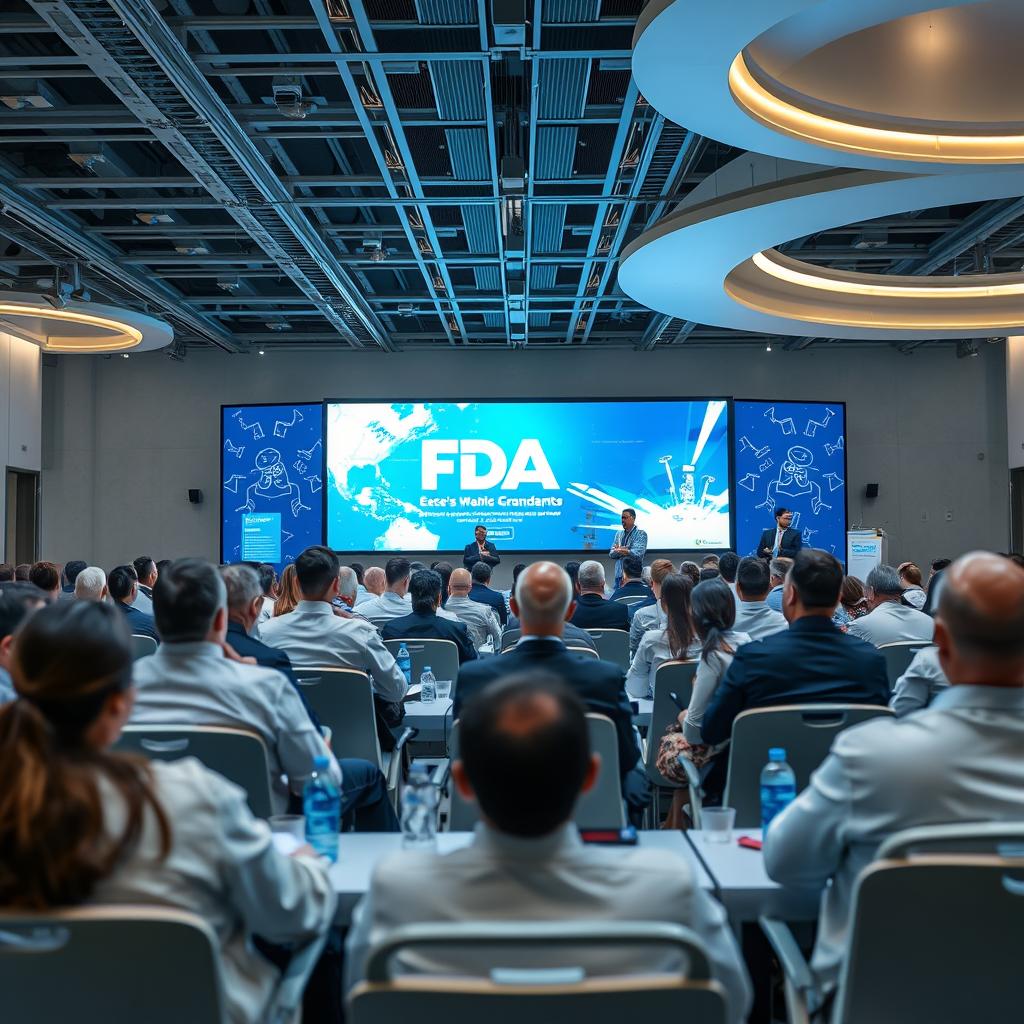
At REDI 2026, the FDA announced new guidelines for AI-driven drug development and the integration of the QSR into the QMSR for medical devices.
Global Regulatory Harmonization and the Introduction of QMSR
The U.S. Food and Drug Administration (FDA) will officially transition the Quality System Regulation (QSR) for medical devices to the Quality Management System Regulation (QMSR) on February 2, 2026, completing its formal integration with the international standard ISO 13485:2016. This measure aims to significantly reduce the regulatory burden for medical device manufacturers seeking to enter the global market, who previously had to comply with both U.S. regulations and global standards. Companies can now establish a unified quality management system, reducing regulatory risks and accelerating the process of obtaining international approvals. Ultimately, this regulatory harmonization is expected to create tangible value by stabilizing global supply chains and improving access to innovative medical products for patients.
ICH E6(R3) Guidelines Driving Innovation in Clinical Trials
The International Council for Harmonisation (ICH) finalized Annex 2, which addresses non-traditional clinical trials, on June 3, 2026, completing the ICH E6(R3) guidelines for clinical trial protocols. This revision officially incorporates decentralized clinical trials (DCTs) and the regulatory use of real-world data (RWD), fully embracing modern clinical environments integrated with digital healthcare technologies. Sponsors can now build patient-centric risk prevention models from the design stage, reducing clinical trial patient recruitment costs and significantly lowering dropout rates. This will accelerate pipeline development and serve as a critical strategic tool for managing the burn rate of small and medium-sized biotech companies.
Regulatory Framework for AI-Driven Drug Development
The FDA, led by the Center for Drug Evaluation and Research (CDER) and the Center for Biologics Evaluation and Research (CBER), has begun to establish clearer regulatory verification criteria for drug development using artificial intelligence (AI) and machine learning (ML) technologies. Previously, the AI-driven drug development field faced uncertainty during clinical entry due to unclear regulatory verification criteria. However, these guidelines will ensure algorithm reliability and data transparency. This will enable the prediction of candidate efficacy in Phase 1 clinical trials, reducing the probability of clinical failure and significantly reducing research costs. The market anticipates that increased regulatory predictability will further stimulate venture capital (VC) investment in AI platform-based biotech companies.
Strengthening CMC Regulations for Innovative Biologics and Manufacturing Processes
With the recent emergence of innovative cell and gene therapies, as well as vaccine adjuvants, the manufacturing quality control (CMC) regulations for biologics have become a major hurdle for biotech approvals. Through this annual training, the FDA emphasized proactive regulation by providing detailed guidance on the requirements for bacteriophages for combating bacterial diseases and advanced manufacturing facility inspection guidelines. This will help alleviate the chronic bottleneck of early-stage biotech companies receiving Complete Response Letters (CRLs) related to CMC, even after demonstrating clinical efficacy. Ultimately, investors will place greater value on pipelines that demonstrate regulatory compliance and the feasibility of commercial-scale production processes early on.
The FDA's QMSR regulation, effective February 2, 2026, will directly reduce approval costs and administrative inefficiencies in the global medical device market, which is estimated at approximately USD 605 billion to 720 billion in 2026. Furthermore, the ICH E6(R3) guidelines, finalized on June 3 of the same year, will secure the regulatory status of decentralized clinical trials (DCTs), slowing down the burn rate and maximizing the efficiency of existing Phase 1/2/3 development pipelines. Given that regulatory compliance is a key factor in valuation, researchers and investment institutions must evaluate not only clinical efficacy but also regulatory optimization and the suitability of commercial production processes (CMC) early on. In the long term, this regulatory easing and international harmonization are expected to have a significant financial impact, potentially shortening the exit strategy (M&A and IPO) timeline for biotech companies by up to 20%.