FDA to Hold Public Hearing on Customized Review of Moderna mRNA-3705 and Denali Rare Disease Therapies
Regulatory Paradigm Innovation to Overcome 5% Approval Rate Limit
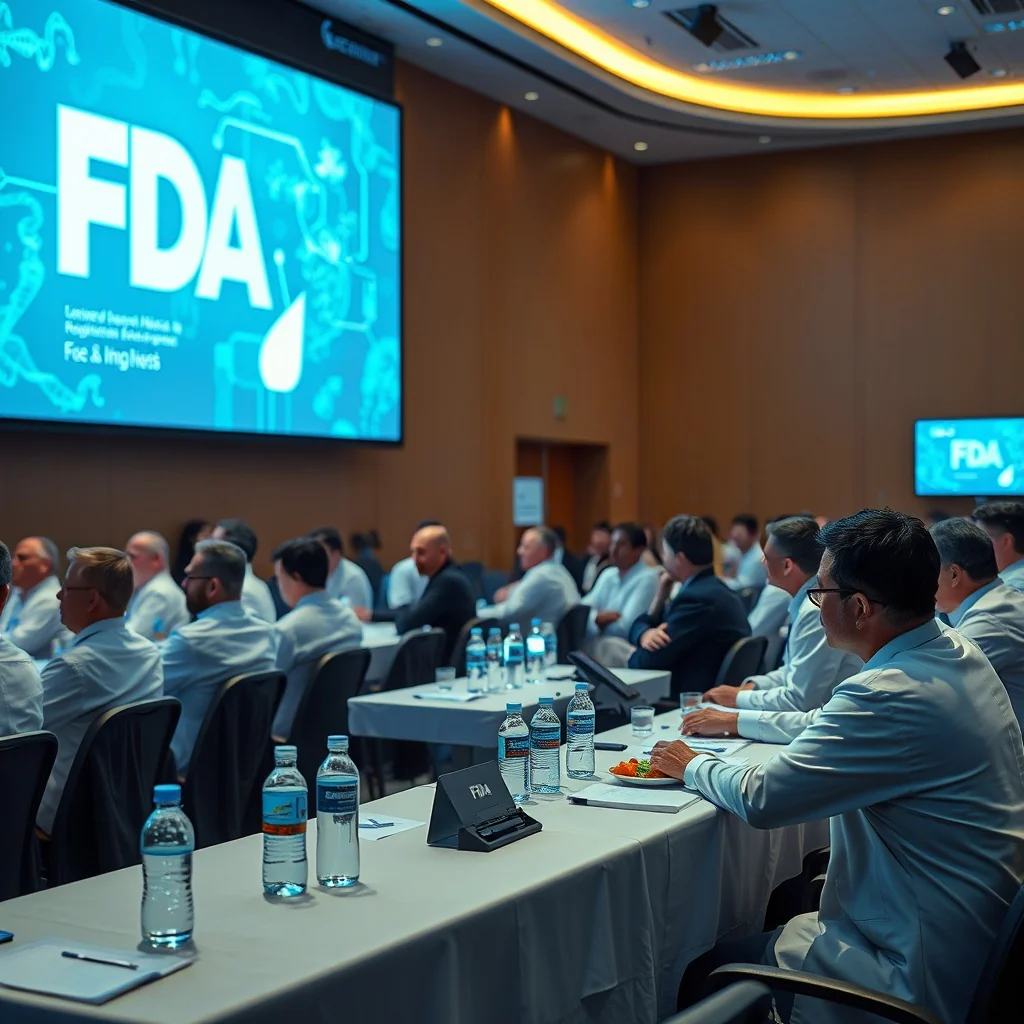
The U.S. Food and Drug Administration (FDA) and the Reagan-Udall Foundation are scheduled to hold a hybrid public hearing for the Rare Disease Framework Initiative on October 28, 2026. Among more than 10,000 rare diseases worldwide, only 5% have approved treatments, and the global rare disease drug market is projected to reach approximately $293.6 billion (USD 293.6B) by 2026; in this context, traditional large-scale randomized controlled trials (RCTs) have encountered structural limitations. The FDA aims to establish flexible evaluation systems by developing customized (Fit-for-purpose) regulatory standards that reflect small patient populations and disease heterogeneity. This public hearing is expected to serve as a forum for discussing early approval pathways based on scientific validity, moving beyond rigid statistical criteria.
Ensuring Review Consistency Between CBER and CDER and Expanding START Pilot
This meeting is being held to resolve review discrepancies between the Center for Biologics Evaluation and Research (CBER) and the Center for Drug Evaluation and Research (CDER) and to standardize communication within the Rare Disease Innovation Hub. Through the START pilot program, the FDA has been validating seven pipelines, including Moderna's (MRNA) mRNA-3705 and Denali Therapeutics' (DNLI) DNL126, via ad hoc advisory channels. Regulatory authorities intend to institutionalize consistent inter-departmental review guidelines to reduce conflicts regarding surrogate endpoints, as seen in the case of Sarepta Therapeutics' (SRPT) Elevidys. Unifying standards between centers is expected to visibly shorten review periods and reduce development costs.
Introducing CMC Regulatory Flexibility for Small-Batch Production
Chemistry, Manufacturing, and Controls (CMC) regulatory requirements, a major hurdle in the commercialization of rare disease therapies, are also set to be significantly refined. Gene therapies and oligonucleotides for patient groups in the dozens have struggled to meet large-scale commercial production validation standards. The FDA is exploring ways to make early-stage quality fitness-for-purpose assessment requirements more realistic based on attainable evidence. This will significantly accelerate pipeline development by easing the burden of early-stage process verification for biotech companies in Phase 1/2.
Formalizing Natural History Studies and Real-World Evidence (RWE) as Controls
Reflecting the input from external experts and patient groups, regulatory authorities are refining guidelines on utilizing natural history studies and real-world evidence (RWE) as external controls. In ultra-rare diseases where placebo controls are impossible, the scope for proving efficacy through alternative biomarkers—such as Neurogene's (NGNE) NGN-401—will expand. This will serve as a core pillar of collaborative governance, preventing unnecessary clinical failures and increasing patient access. Consequently, the threshold for accelerated approval is expected to lower, accelerating the early market entry of promising orphan drugs.
This framework reorganization is a decisive turning point that will significantly reduce regulatory risks in the global orphan drug market, which is projected to grow rapidly from USD 293.6B in 2026 to USD 794.1B by 2030. In the short term, the regulatory meeting cycles for companies participating in the START pilot, such as Moderna (MRNA) with its Phase 1/2 pipeline mRNA-3705 and Denali (DNLI) with DNL126, will shorten, accelerating the achievement of clinical development milestones. In the medium to long term, by officially recognizing Natural History studies and Real-World Evidence (RWE) as external controls, Phase 3 clinical costs for gene therapy developers like Neurogene (NGNE) and Sarepta (SRPT) are expected to be reduced by up to 40% or more, making entry into accelerated approval pathways much easier. As a result, as the Probability of Success (PoS) for rare disease drug development—which stood at only 5%—is structurally adjusted upward, venture capital (VC) valuation premiums for early-stage biotechs possessing platform technologies and definitive disease biomarkers are expected to expand significantly.