AbbVie to Break Ground on Manufacturing Campus in North Carolina for Injectable Drugs, Including Skyrizi
Background of the Establishment of a Mega-Scale Production Base
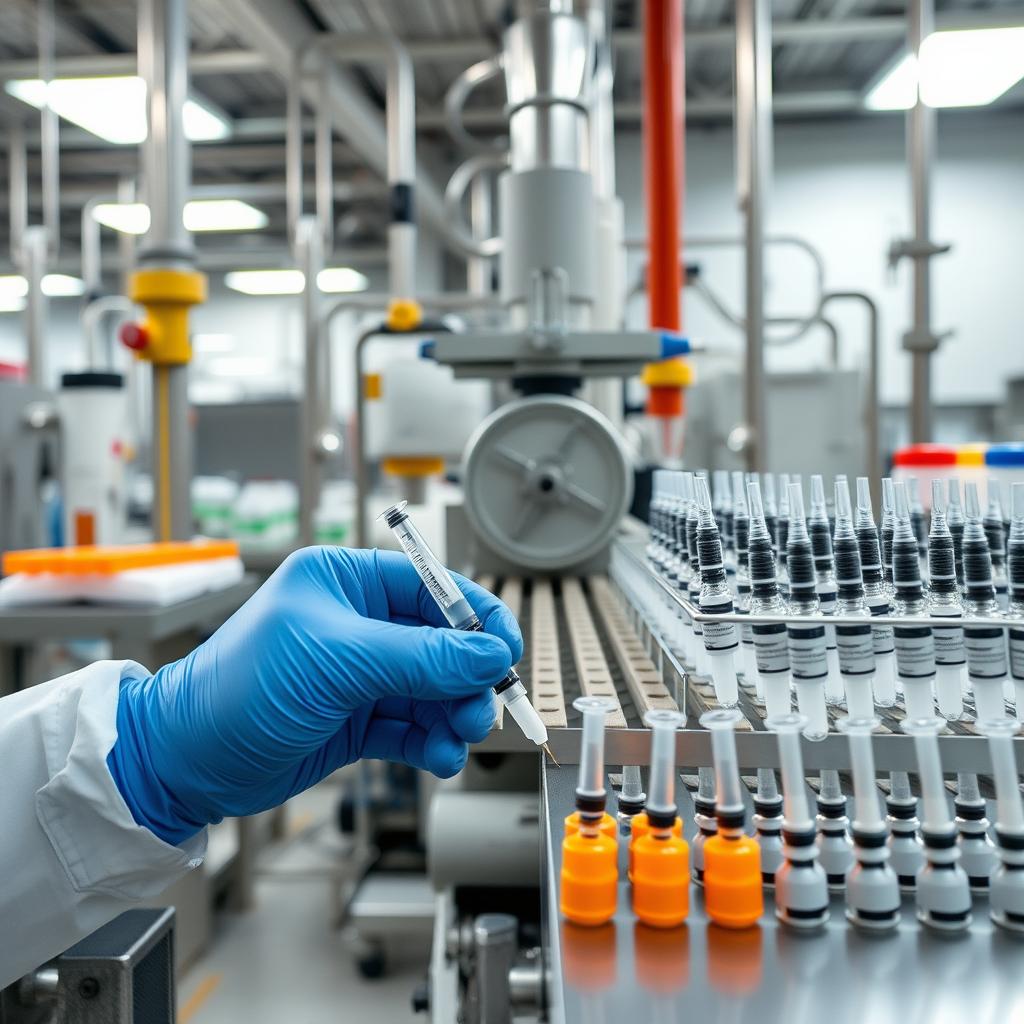
Global pharmaceutical company AbbVie (ABBV) is building a new small volume parenteral (SVP) manufacturing campus in Durham, North Carolina, with an investment of $1.4 billion (approximately 1.9 trillion Korean won). This represents AbbVie's largest single-site capital investment in its history, with construction scheduled to begin in 2026 and completion targeted for the end of 2028. Unlike existing large-scale production facilities, the new campus will focus on securing high-value finished drug product lines that require sophisticated formulation control technology. This strategic decision can be interpreted as an effort to fill the void left by existing blockbuster drugs that have lost patent protection and to secure a stable supply for next-generation pipeline products.
A Hub for Producing Next-Generation Blockbusters
The newly constructed campus will produce AbbVie's key immunology products, including Skyrizi (active ingredient: risankizumab, an IL-23 inhibitor) and Rinvoq (active ingredient: upadacitinib, a JAK1 inhibitor), which are major revenue drivers for the company. In 2025 alone, these two drugs generated a combined revenue of $25.87 billion (approximately 35 trillion Korean won), successfully replacing the previous blockbuster, Humira. In addition, the campus will handle the production of sterile injectables for new biologics in the oncology and neuroscience fields, enabling the company to immediately respond to the rapidly growing market for personalized therapies. The company plans to adopt an AI-based automated production process to maximize manufacturing efficiency and quality control capabilities.
Reasons for Choosing North Carolina
AbbVie chose the location near Research Triangle Park (RTP) because of the region's abundant pool of bio-skilled workers and excellent infrastructure. The state government is also actively supporting the company's investment by providing a Job Development Investment Grant (JDIG) of up to $19.3 million (approximately 26 billion Korean won) over 12 years. Tax benefits and customized administrative support are expected to significantly reduce initial facility construction costs and shorten the construction period. The company also aims to minimize global supply risks by establishing a one-stop distribution system through the region's abundant supply chain and logistics network.
Global Supply Chain Restructuring and Market Impact
This investment aligns with the global healthcare supply chain restructuring trend of strengthening domestic manufacturing capabilities in the United States amid recent geopolitical instability and strengthening trade barriers. Over the past year, AbbVie has invested a total of over $2.2 billion in its U.S. manufacturing facilities, significantly reducing its reliance on overseas production. The establishment of the new campus is expected to create approximately 734 new high-skilled jobs and generate an estimated economic impact of $8 billion in the region. For investors, this can be seen as a demonstration of a strong growth driver in the form of securing a stable, in-house production capacity for high-margin biologics.
This $1.4 billion investment in a new manufacturing facility is a long-term growth assurance for investors, directly addressing the surging global demand for Skyrizi and Rinvoq, successor products in the immunology market that are filling the void left by the patent expiration of Humira. AbbVie generated $25.87 billion in revenue from these two products alone in 2025, and by internalizing its proprietary sterile SVP production lines, it will reduce its reliance on contract development and manufacturing organizations (CDMOs) and improve its cost competitiveness. From a researcher and clinical perspective, it will accelerate the mass production of candidate products when multiple next-generation anticancer and neurological drugs in phase 3 clinical trials are commercialized. In a situation where biosimilar competition is intensifying, the supply stability centered on U.S. domestic production and the annual economic contribution of $8 billion will also have a positive impact on defending against regulatory risks and attracting ESG investments.
Source: BioPharma Dive (rss)