빛으로 심근세포에 프라임 에디팅 전달, 비바이러스 방식 성공
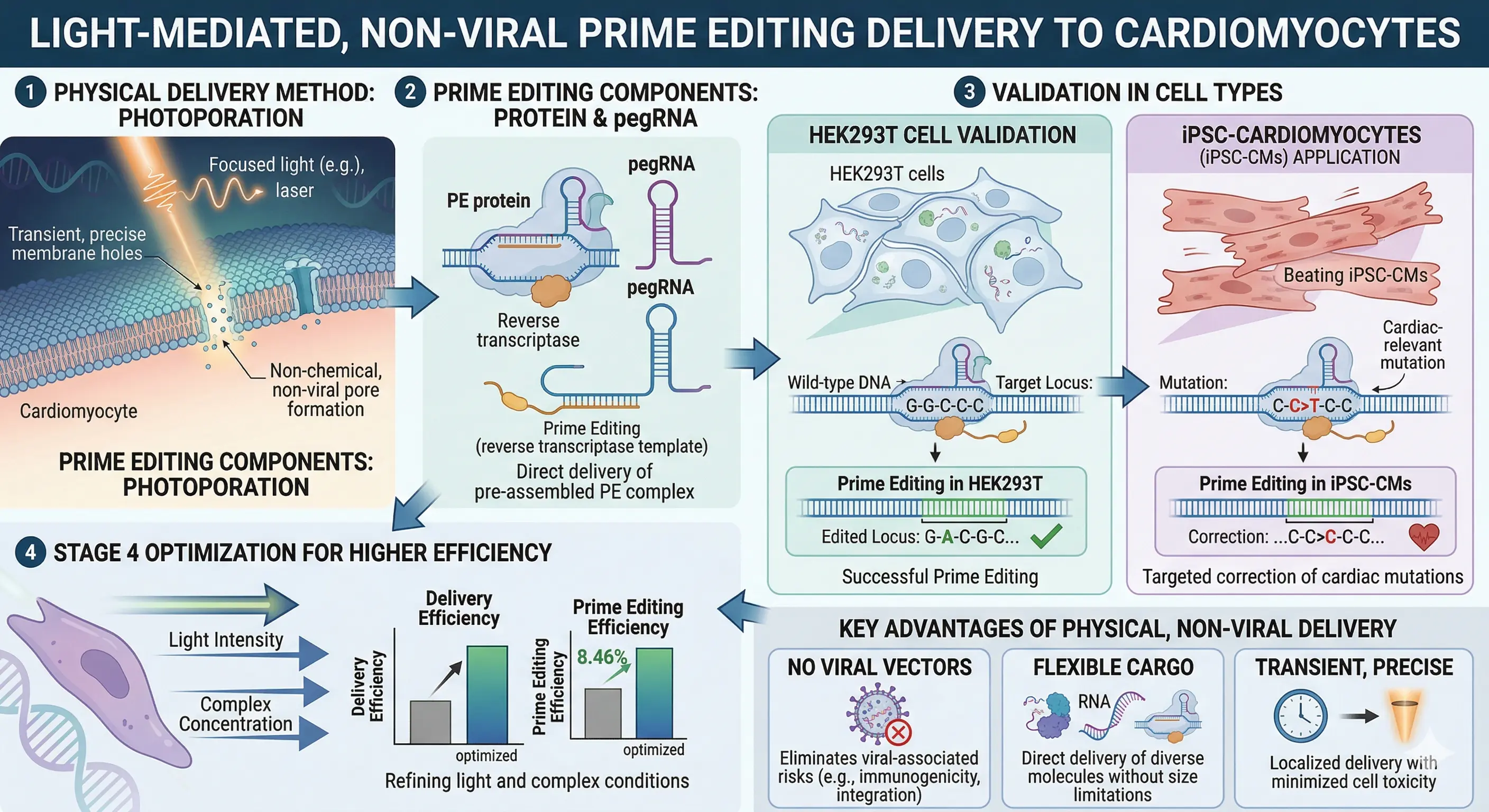
우린 빛으로 세포 구멍을 만들고 프라임 에디팅 단백질을 넣었어요. HEK293T에서 검증하고 iPSC‑심근세포에서도 성공했죠. 최적화하면 편집 효율이 8.46%까지 올라갔어요. 바이러스 없이 물리적으로 전달할 수 있다는 게 큰 장점이에요.
Prime editing (PE) offers precise genome modification without inducing double-strand breaks; however, its application in cardiomyocytes remains constrained by the lack of efficient and non-integrative delivery strategies. Here, we report a tunable photoporation-based approach for the non-viral delivery of PE ribonucleoprotein (RNP) complexes into human induced pluripotent stem cell-derived cardiomyocytes (iPSC-CMs), a clinically relevant model for cardiac disease. Using LumiSense nanosensitizers, we first validated cytosolic delivery and editing feasibility in HEK293T cells, and subsequently achieved efficient photoporation in hard-to-transfect iPSC-CMs. Fluorescence imaging confirmed intracellular uptake of PE RNPs, and droplet digital PCR revealed prime-editing frequencies of up to 8.46% under optimized conditions. This study demonstrates a non-integrative and controllable physical strategy for PE RNP delivery into human cardiomyocytes, providing a promising foundation for the development of genome editing-based therapeutic interventions for cardiac disorders.
심장 질환 유전자 교정에 안전하고 효율적인 전달법 확보