말초신경 손상 후 근육 재프로그래밍, 전임상 연구의 가능성과 한계
배경
말초신경 손상 후 나타나는 근육 위축과 섬유화를 줄이고 신경근접합부 재형성을 돕는 접근으로 근육 재프로그래밍이 연구되고 있다. Experimental Biology and Medicine에 실린 종설은 이러한 접근의 기전과 치료적 가능성, 임상 적용 과제를 정리했다. 새 임상시험의 결과를 보고한 논문은 아니며, 효능 근거는 주로 설치류 연구에서 나왔다.
손상된 신경이 근육에 다시 연결되는 재신경지배가 늦어지거나 불완전하면 기존 신경 복구 전략만으로는 기능 회복이 제한될 수 있다. 신경이 다시 자라는 동안 연결 대상인 근육의 상태도 보존하자는 것이 근육 표적 접근의 취지다.
핵심 발견
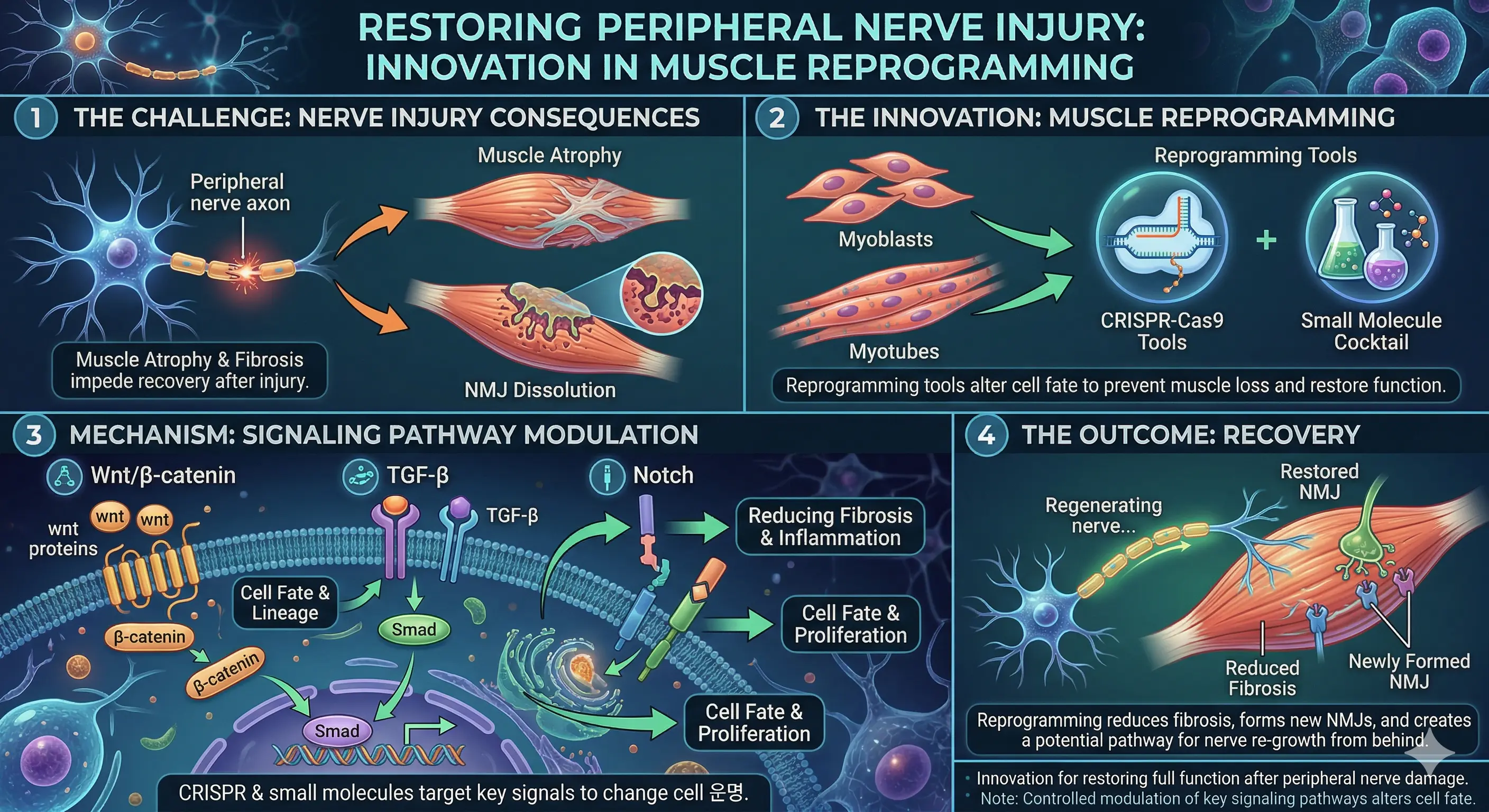
종설은 근육 재프로그래밍이 신경 연결 상실로 생기는 근육 위축을 완화하고 섬유화를 늦추며, 신경과 근육이 신호를 주고받는 신경근접합부(NMJ)의 재형성을 도울 가능성을 다룬다. 여기서 재프로그래밍은 근육 세포의 운명을 바꾸는 작업에만 국한되지 않는다. 근육에 상주하는 세포의 기능·대사 상태와 주변 환경을 조절하는 개입도 포함한다.
표적에는 근육 재생을 담당하는 위성세포와, 만성 손상 환경에서 섬유화·지방 축적에 관여하는 섬유지방전구세포 등이 포함된다. 윈트/베타카테닌(Wnt/β-catenin), 전환성장인자 베타(TGF-β), 노치(Notch) 신호 조절과 소분자 조합은 이들 세포의 반응을 바꾸려는 연구 수단으로 소개됐다. 각각의 표적과 조절 방식이 다르므로 동일한 치료법으로 묶어 이해해서는 곤란하다.
크리스퍼 기반 전사 활성화(CRISPRa)도 검토 대상이다. 이는 DNA 절단으로 염기서열을 바꾸는 방식과 구분되며, 근육 형성 관련 유전자의 발현을 활성화하는 접근이다. 종설은 근육에서 신경으로 전달되는 역행성 신호가 신경 재성장을 지원할 가능성도 설명한다. 다만 이러한 기전과 전임상 결과만으로 사람에서의 치료 효과를 판단할 수는 없다.
의미와 전망
근육 보존과 재생을 신경 복구와 병행하는 전략은 신경과 근육의 연결 회복을 함께 겨냥한다. 근육 재프로그래밍은 기존 신경 복구를 보완하는 연구 방향으로 제시됐으며, 환자의 회복 가능성이 크게 증가했다고 결론 내릴 근거는 확보되지 않았다.
사람에게 적용하려면 원하는 세포에 개입 물질을 전달할 수 있는지, 새 근육세포가 충분히 성숙하고 기능적인 신경 연결을 형성하는지 검증해야 한다. 면역반응과 의도하지 않은 세포 변화, 종양원성 및 장기 안전성도 남은 과제다. 종설의 일부 구체적 효능 주장에는 인용문헌과의 주제 불일치가 있어, 개별 원저 확인 없이 수치나 치료 시기를 임상 적용 기준으로 받아들이기 어렵다.
출처는 Europe PMC 수록 종설 전문이다.
Peripheral nerve injury (PNI) presents a significant clinical challenge, frequently leading to long-term neuromuscular dysfunction, muscle atrophy, fibrosis, and chronic pain. Traditional repair strategies, including microsurgical reconnection and neurotrophic support, often yield limited functional recovery, especially in cases of delayed or incomplete reinnervation. In this context, skeletal muscle reprogramming-defined as the intentional modulation of cellular fate, function, or metabolic state in muscle-resident cells-has emerged as a promising strategy to enhance regenerative outcomes. This process involves transcriptional, epigenetic, and metabolic interventions targeting myogenic progenitors, fibro-adipogenic progenitors (FAPs), satellite cells (MuSCs), and the broader muscle microenvironment. Recent studies demonstrate that reprogramming strategies can mitigate denervation-induced muscle atrophy, delay fibrotic remodeling, promote neuromuscular junction (NMJ) reconstruction, and even stimulate endogenous nerve regrowth via retrograde signaling. Mechanistic insights have uncovered pivotal roles for signaling pathways such as Wnt/β-catenin, TGF-β, Notch, and HDAC-regulated chromatin dynamics. Furthermore, innovations in small molecule cocktails, CRISPR-based transcriptional reactivation, and metabolic rewiring have expanded the therapeutic toolkit for muscle preservation and regeneration. This review comprehensively examines the molecular mechanisms, therapeutic roles, and translational challenges of skeletal muscle reprogramming in the context of PNI. We explore how muscle-targeted interventions can address complications of denervation, improve the efficacy of nerve repair, and offer a synergistic axis of regeneration when integrated with nerve-centric strategies. Finally, we identify key knowledge gaps and outline future research directions required to translate reprogramming-based therapies into clinical practice.
신경 복구 수술 뒤 재신경지배를 기다리는 동안 근육 위축과 섬유화를 줄일 수 있다면, 재생한 신경이 연결될 근육의 상태를 보존하는 데 도움이 될 가능성이 있다. 구체적인 후속 연구 시나리오는 신경 복구에 국소 근육 표적 개입을 병행하고, 근육량뿐 아니라 신경근접합부의 기능과 운동 회복을 함께 평가하는 것이다. 다만 이는 종설이 제시한 연구 방향이다. 현재 환자에게 효과가 입증된 치료로 해석할 수 없으며, 적용 전에는 전달 효율·표적 특이성·장기 안전성과 실제 기능 개선을 검증해야 한다.