MPS, AAV 유전자치료 후보 평가의 보완 도구로 제안
배경
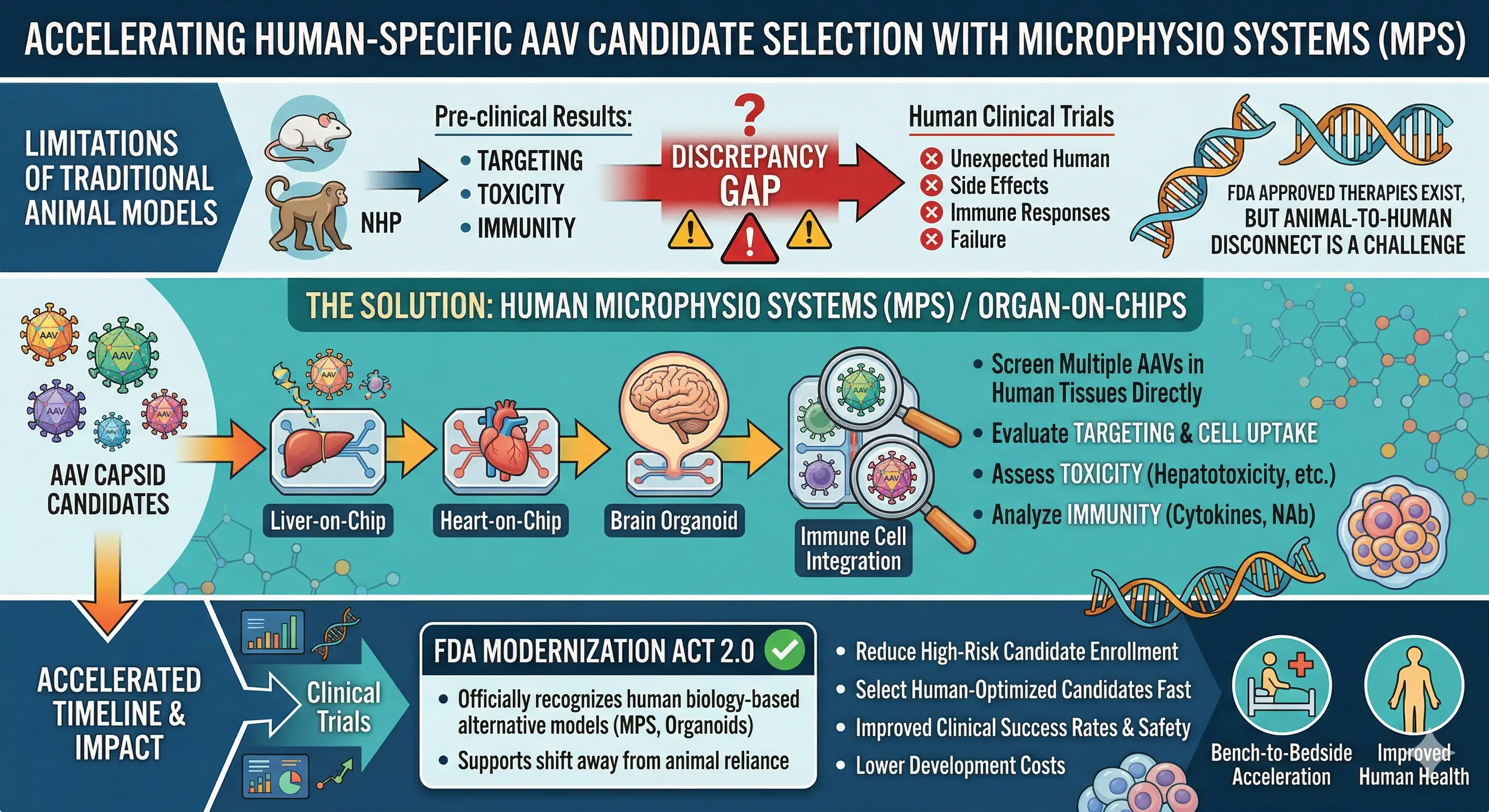
아데노연관바이러스(AAV) 유전자치료의 전임상 예측과 임상 결과 사이의 간극을 줄일 보완 도구로 미세생리시스템(MPS)을 활용하자는 리뷰가 나왔다. 저자들은 여러 질환 영역에서 규제 승인된 AAV 기반 제품 8개를 언급하면서도, 임상 성과를 예측하는 데 여전히 한계가 있다고 설명했다. 간독성, 면역반응, 조직 친화성처럼 전임상 평가와 실제 환자에서 차이가 나타날 수 있는 요소가 주요 과제다.
핵심 발견
리뷰는 오가노이드와 장기칩 등을 포함하는 MPS를 인간 조직의 특성을 반영한 환경에서 AAV의 조직 친화성, 안전성, 유효성을 평가하는 접근으로 소개했다. 조직 친화성은 벡터가 어떤 조직을 표적으로 삼는지를 뜻한다. 저자들은 AAV 평가에 MPS를 적용한 연구 동향과 현재 한계를 정리하고, 개발 과정에 통합하는 틀을 제안했다.
다만 제공된 초록에는 특정 MPS의 예측 정확도나 후보 선별 속도, 임상 실패 감소율이 제시되지 않았다. 새로운 후보의 선별 성과를 직접 입증한 실험 보고가 아니라, 기존 연구와 활용 가능성을 논하는 리뷰라는 구분이 필요하다.
의미와 전망
MPS는 임상 성공 가능성이 높은 후보의 우선순위를 정하는 보완적 필터로 활용될 가능성이 있다. 위험한 후보를 확실히 걸러내거나 환자에서의 안전성과 효과를 보장한다는 의미는 아니다. 어떤 모델이 어떤 평가 목적에 적합한지와 실제 임상 결과를 얼마나 예측하는지는 별도로 검증해야 한다.
초록은 FDA 현대화법 2.0과 미국 국립보건원(NIH)의 연구혁신·검증·응용실(ORIVA)을 인간 기반 모델의 도입과 적격성 평가를 촉진하는 움직임으로 소개했다. 이 설명만으로 개별 MPS의 규제상 인정이나 동물시험 대체 범위를 판단할 수는 없다. 연구 내용은 Advanced Drug Delivery Reviews에 실린 리뷰 초록에서 확인할 수 있다.
While adeno-associated viral (AAV) vectors are the leading platform in gene therapy - with eight regulatory-approved products spanning multiple disease areas - their clinical performance remains only partially predictable. A major challenge lies in the discrepancy between preclinical model predictions and clinical outcomes, particularly with respect to adverse events such as liver toxicity, immune responses, and tissue tropism. Microphysiological systems (MPS), including organoids and organs-on-chips, offer a promising and powerful approach to address some of these challenges. As emerging "New Approach Methodologies (NAMs)" they provide a human-relevant context to evaluate AAV vectors for tropism, safety, and efficacy, thereby helping to de-risk and accelerate their development. This trajectory is further reinforced by recent initiatives such as the FDA Modernization Act 2.0 and the NIH's Office of Research Innovation, Validation, and Application (ORIVA), both of which promote the adoption and qualification of human-based models in biomedical research. This review summarizes the latest advances in the application of MPS technologies to AAV evaluation, outlines their current limitations and proposes a framework for their integration into AAV development pipeline. Ultimately, MPS could serve as a valuable "human-relevant filter" to prioritize vectors with the highest likelihood of clinical success, ensuring that only the safest and most effective candidates advance to patients.
AAV 개발자가 여러 후보 벡터의 평가 순서를 정할 때, 인간 조직의 특성을 반영한 MPS 결과를 보완 자료로 검토하는 시나리오를 생각할 수 있다. 조직 친화성·안전성·유효성을 평가한 정보를 기존 전임상 자료와 함께 살펴 후속 검증 대상을 좁히자는 취지다. 다만 이 리뷰의 초록만으로 후보 탈락 기준이나 임상 예측력을 정할 수는 없다. 임상 실패 위험 감소와 개발 가속은 기대 효과이며, 실제 적용에는 모델별 성능과 평가 목적에 맞는 검증이 뒤따라야 한다.