CRISPR로 파킨슨 유전자 교정 가능성 부각
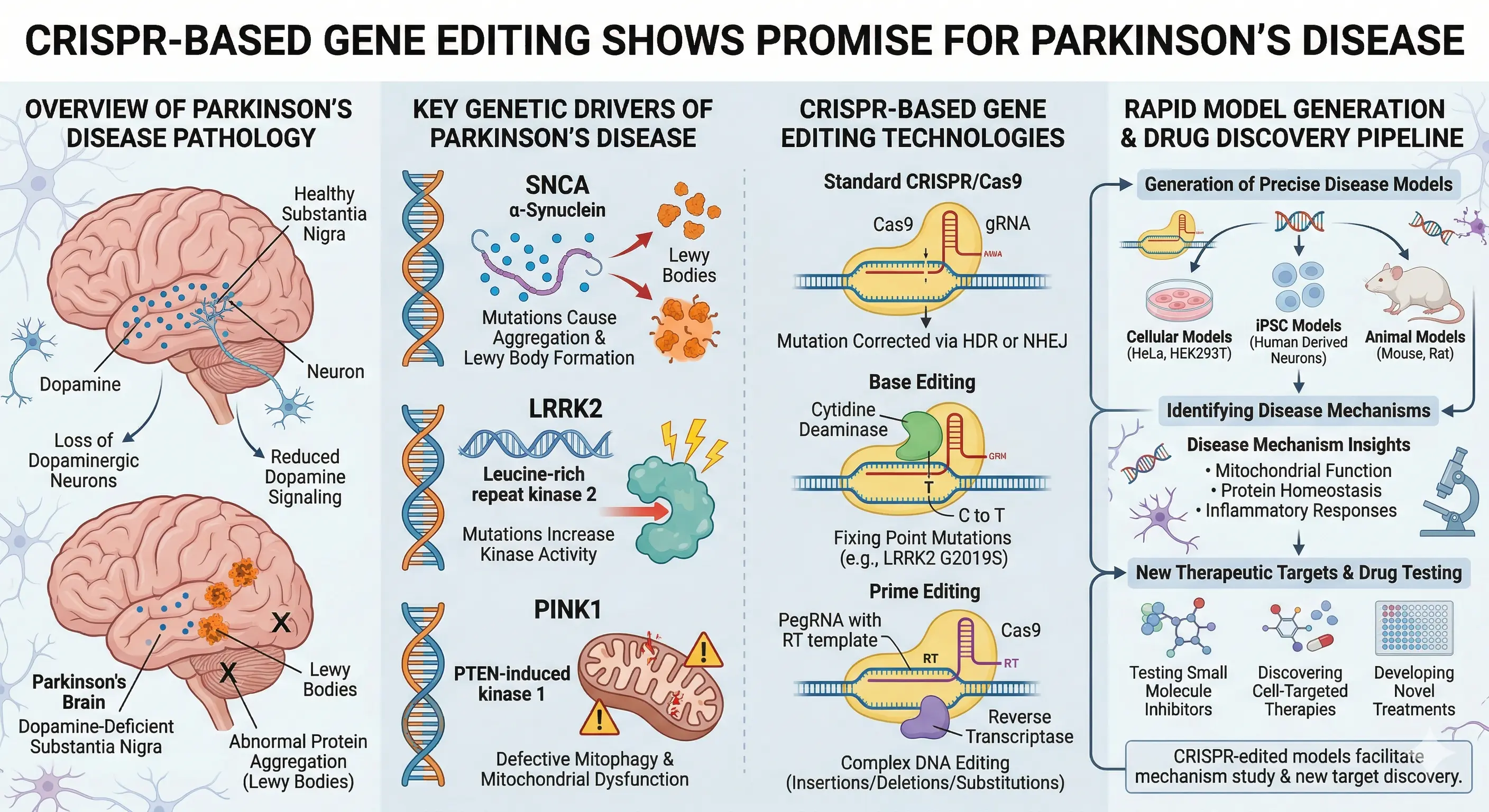
배경
파킨슨병 연구에서 크리스퍼(CRISPR) 유전자 편집을 질병 모델 제작과 치료 전략 탐색에 활용할 가능성을 정리한 리뷰가 나왔다. 이 논문은 관련 기술과 연구 모델을 검토한 문헌 리뷰로, 환자에서 유전자 교정의 치료 효과를 입증한 연구는 아니다.
파킨슨병은 뇌의 흑질에서 도파민을 만드는 신경세포가 점차 소실되는 질환으로, 운동 증상과 비운동 증상이 나타난다. 리뷰는 증상 치료와 별개로 질병 진행을 멈추거나 되돌릴 효과적인 치료법이 없다는 문제에서 출발했다. SNCA·LRRK2·PINK1은 리뷰가 다루는 주요 관련 유전자이며, 이들 변이를 모든 파킨슨병의 원인으로 일반화해서는 안 된다.
핵심 발견
리뷰는 CRISPR-Cas9, 프라임 편집, 염기 편집의 작동 원리와 파킨슨병 연구에서의 활용을 살폈다. 파킨슨병 관련 변이를 교정하거나 병원성 유전자 발현을 조절하는 전략이 검토 대상이다. 다만 제공된 초록에는 유전자별 교정 성공률이나 정확도를 판단할 수치가 없어, 각 기술로 해당 변이의 정확한 교정이 확립됐다고 단정하기는 어렵다.
CRISPR로 만드는 연구 모델에는 동질유전적 세포주, 형질전환 동물, 유도만능줄기세포(iPSC) 모델이 포함된다. 리뷰는 이들 모델이 질병 경로를 밝히고 새로운 치료 표적을 찾는 데 어떤 역할을 하는지 설명했다. 모델 제작이 빠르다는 결과나 기존 방법과 비교한 제작 기간은 초록에 제시되지 않았다.
의미와 전망
CRISPR 기반 모델은 파킨슨병의 기전을 파악하고 치료 표적을 탐색하는 연구 도구로 활용될 수 있다. 리뷰는 미토콘드리아 기능장애 같은 과정을 겨냥한 신경보호 전략의 잠재력도 다뤘다.
연구 모델의 활용 가능성과 환자 치료 효과는 구분해야 한다. 저자들은 임상 전환의 과제를 함께 논의하지만, 초록만으로 구체적인 실험 조건이나 임상 적용의 한계를 평가하기는 어렵다. 환자에서 질병 진행을 억제하거나 되돌렸다는 결과도 제시되지 않았다.
관련 내용은 Neurochemistry International 리뷰 초록에서 확인할 수 있다.
Parkinson's disease (PD) is an illness that causes both motor and non-motor symptoms in the patient which occurs as a result of a progressive loss of dopamine-producing neurons in the substantia nigra. Even though the success of symptomatic treatments is promising, at the same time there is currently no effective therapy that can halt or reverse disease progression. Key genes such as SNCA, LRRK2, and PINK1 are considered as the main hopefuls aspect for the treatment of Parkinson's because mutations of these genes are the reason for the appearance of the familial and sporadic kinds of the disease, respectively. The CRISPR-Cas system, a breakthrough genome-editing technology which enables precise and targeted genetic modifications, renders the possibilities of both PD research and therapy. Examining the mechanics of prime editing, base editing, and CRISPR-Cas9 highlights how effective and precise these methods are for modifying genes. An overview of recent developments in the use of CRISPR to create PD models is also included in the current review, with a focus on the roles these models play in clarifying disease pathways and locating new treatment targets. These models include isogenic cell lines, transgenic animals, and induced pluripotent stem cells (iPSCs). This review highlights the potential of CRISPR-based strategies to correct PD-associated mutations, modulate pathogenic gene expression, and develop neuroprotective interventions targeting key processes such as mitochondrial dysfunction. Furthermore, it critically evaluates the role of CRISPR-based technologies as transformative tools in PD research and therapy while highlighting key challenges for their clinical translation.
이 리뷰의 실질적 의미는 유전자 교정을 파킨슨병 연구 모델과 치료 표적 탐색의 도구로 살펴보는 데 있다. 연구자는 CRISPR 기반 세포·동물·iPSC 모델을 활용해 질병 경로를 조사하고 후속 연구에서 다룰 표적을 찾는 방향을 검토할 수 있다. 미토콘드리아 기능장애를 겨냥한 신경보호 전략도 탐색 대상으로 제시됐다. 다만 제공된 초록은 모델별 성능이나 환자 효능을 제시하지 않으므로, 특정 편집법의 우수성이나 질병 진행 억제·역전을 기대 효과로 확정할 근거는 부족하다.