Trump's MMR Separation Executive Order Expands Regulatory Risk for Merck and GSK's Vaccine Business
Scope of the Executive Order
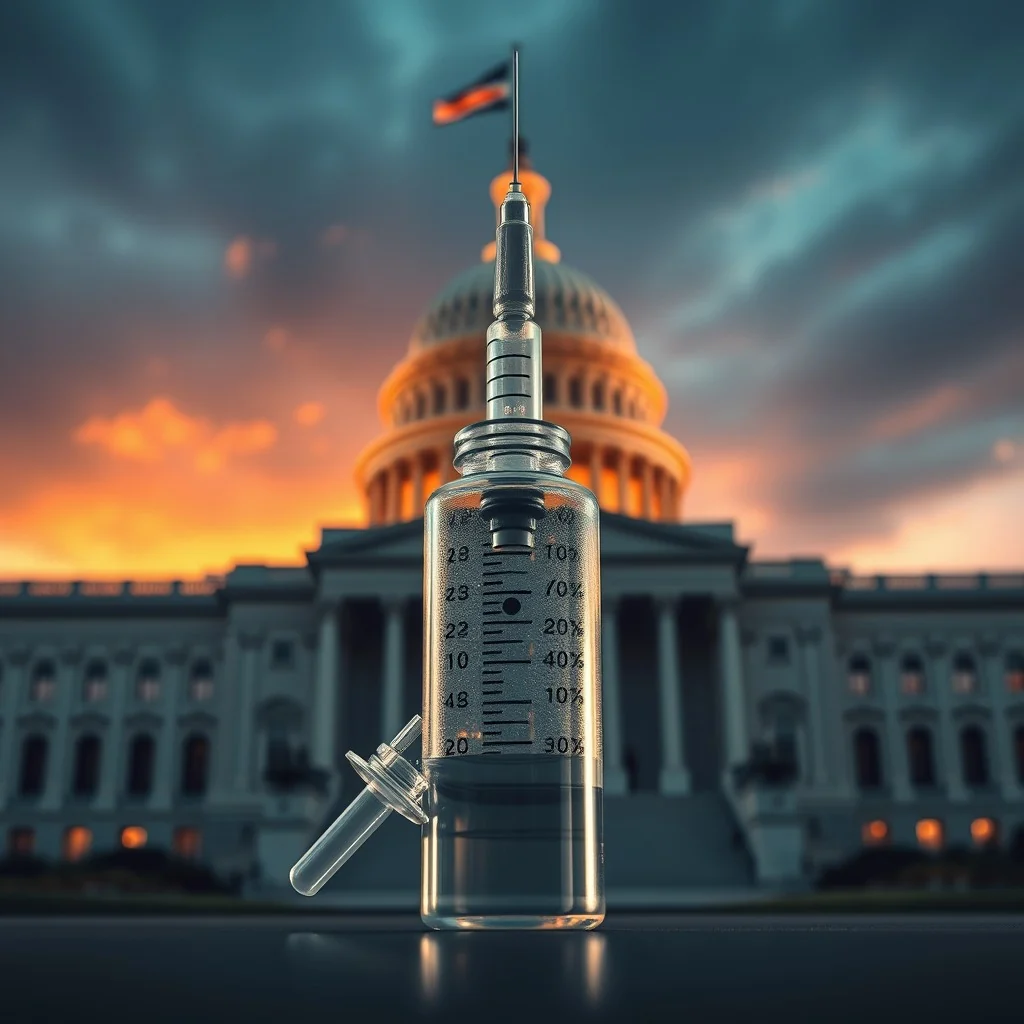
On August 10, 2026, President Donald Trump signed an executive order to revise childhood vaccine recommendations. The order supports a system where the CDC adjusts the 17 vaccines it recommended for all children in 2024 to focus on 11 core diseases. It also requires HHS to submit a follow-up plan within 90 days. In the U.S., MMR is moving towards separate administration of individual vaccines after the combined measles, mumps, and rubella vaccine was available. This is not an immediate ban on the sale of currently approved combination vaccines. The link between vaccines and autism has not been supported by large-scale studies, leading to ongoing debate about the scientific validity of the policy.
Direct Exposure of Merck and GSK
The marketed products in the U.S. MMR market are Merck & Co.'s M-M-R II (measles, mumps, and rubella live virus vaccine) and GSK's Priorix (same three live virus antigens). Both products are in the marketed phase, and Priorix received FDA approval on June 6, 2022, competing with M-M-R II. The transition to individual vaccines requires new production facilities, clinical data, FDA approval, and separate distribution channels. Therefore, the impact will be more on increased development costs and supply chain complexity rather than a short-term decline in sales. Merck's combined 2025 sales of ProQuad, M-M-R II, and Varivax are USD 2.451 billion, which can be used to quantify the policy exposure.
Product Groups Affected by Reduced Recommendations
The new system places RSV and A/B type hepatitis vaccines in the risk-based recommendation category and influenza and COVID-19 vaccines in the shared clinical decision-making area. Related marketed products include Pfizer's Abrysvo (RSV prefusion F antigen vaccine), Sanofi and AstraZeneca's Beyfortus (nirsevimab, an RSV prefusion F-targeting monoclonal antibody), and GSK's Engerix-B (hepatitis B surface antigen vaccine). However, the May 2026 executive order stipulates that all products in the CDC's recommendation categories will maintain free coverage through private insurance, Medicaid, CHIP, and Vaccines for Children. Therefore, the key impact will be on reduced healthcare provider recommendations and lower vaccination convenience, rather than an immediate cessation of reimbursement.
Investment Judgment and Competitive Landscape
The U.S. childhood vaccine market in 2025 is estimated at USD 18.70 billion, and the global market is USD 46.86 billion, indicating a significant industrial impact of the policy change. Lawsuits between the U.S. government, state governments, and medical organizations will affect the implementation speed of the recommendation system and the manufacturers' ability to forecast demand. The structure requiring multiple visits reduces vaccination completion rates and increases cold chain, inventory, and healthcare facility operating costs, which goes against the convenience value of combination vaccines. For Merck and GSK, the key downside factors are the slower growth rate of the U.S. childhood vaccine franchise and the increased burden of developing individual vaccines, rather than a short-term collapse in earnings.
The U.S. childhood vaccine market is USD 18.70 billion in 2025, and Merck's ProQuad, M-M-R II, and Varivax alone generated USD 2.451 billion in sales in 2025, making the change in recommendations a significant factor affecting earnings. The transition to individual measles, mumps, and rubella vaccines to replace the marketed M-M-R II and Priorix in the U.S. requires production conversion and FDA review, so the short-term impact will be focused on increased costs and reduced demand visibility rather than an immediate ban on sales. Although Abrysvo and Beyfortus, marketed RSV prevention products, have moved to risk-based recommendations, federal insurance coverage will be maintained, so the key indicators will be changes in healthcare provider recommendations and vaccination rates rather than the elimination of reimbursement. In the medium to long term, the regulatory discount rate will be reflected in the return on investment in U.S. vaccines for Merck, GSK, Pfizer, Sanofi, and AstraZeneca, and in the priority of developing next-generation combination vaccines.
Source: BioPharma Dive (rss)
https://www.biopharmadive.com/news/trump-executive-order-childhood-vaccine-schedule-autism/827510/