Rutgers Cancer Institute Completes Enrollment for Phase 2 Adaptive Radiation Therapy Trial in NSCLC to Reduce Toxicity with Imfinzi Combination
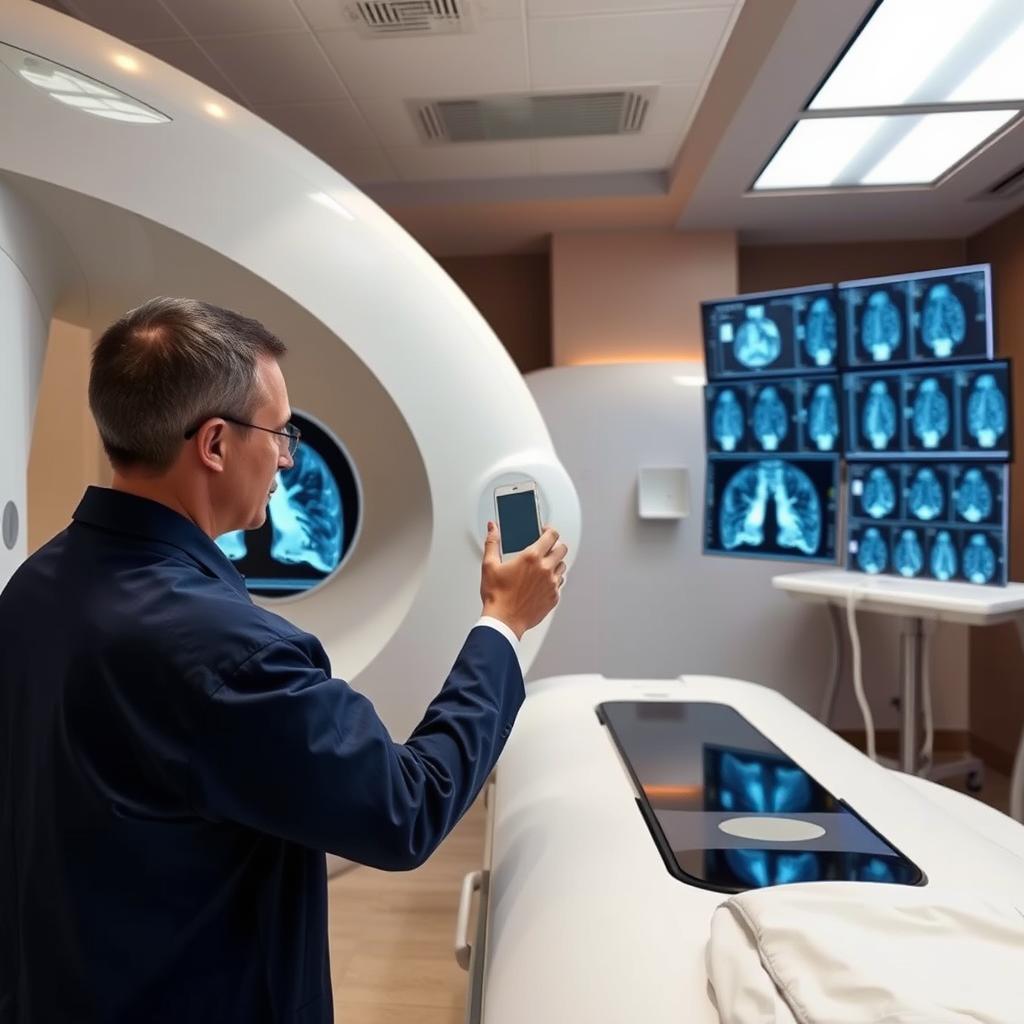
Innovative Trial Addresses Critical Toxicity in Immunotherapy and Chemoradiotherapy Combination
In the treatment of Stage 2-4 Non-Small Cell Lung Cancer (NSCLC), the combination of chemoradiotherapy and immune checkpoint inhibitors has become a standard treatment. However, the severe radiation-induced pneumonitis and cardiopulmonary toxicity that can occur when these two therapies are combined pose a significant limitation, often leading to treatment discontinuation. The Phase 2 clinical trial, jointly conducted by the Rutgers Cancer Institute of New Jersey and the National Cancer Institute (NCI), is designed to prevent these toxicities and maximize treatment completion rates. It represents a paradigm shift by moving away from fixed radiation plans and adopting an adaptive treatment strategy that responds in real-time to the patient's anatomical changes.
Mechanism of Adaptive Planning: Real-Time Response to Patient-Specific Tumor Shrinkage
Adaptive Radiation Planning (ART) is a technique that redesigns the radiation field during treatment to reflect changes in tumor size or organ movement. In this clinical trial, patients undergo computed tomography (CT) scans on days 15 and 29 of treatment to assess tumor volume changes and adjust the radiation field accordingly. If radiation is delivered to the same area as in the initial plan, even after the tumor has shrunk, it can expose surrounding normal lung and heart tissue, leading to serious side effects. This precise adjustment protects normal cells, enabling patients to safely complete the full course of AstraZeneca's Imfinzi (active ingredient: durvalumab) immunotherapy.
Statistical Validation Through Comparison with Historical Controls and Clinical Timeline
This clinical trial is a single-arm, Phase 2 study designed for a total of 34 patients with non-small cell lung cancer. The first patient was enrolled on February 11, 2021, and enrollment is now complete, with the study currently in an active (not recruiting) state. Researchers will collect data on the incidence of radiation pneumonitis at 6 months in patients who received adaptive radiation therapy and compare it with data from historical controls who received a fixed radiation plan using a one-sided z-test to demonstrate statistical significance. The primary endpoint completion date for this study is scheduled for December 2026, and if significant toxicity reduction is demonstrated, it is expected to become a new standard protocol for controlling radiation pneumonitis.
Global Medical Device Industry Landscape Surrounding the Introduction of AI-Based Adaptive Treatment Devices
The global adaptive radiotherapy (ART) market was valued at approximately $1.0529 billion in 2025, and the online adaptive radiotherapy (OART) market, which supports real-time adjustments, is projected to grow from $197 million in 2024 to $802 million in 2032, with a compound annual growth rate of 22.4%. This has led to intense competition between Siemens Healthineers' Varian, with its AI-based online adaptive platform Ethos, and Elekta, with its high-field MRI-guided system Unity MR-linac, for leadership in the high-end market. If the clinical utility of adaptive treatment is proven in clinical trials, hospitals will accelerate their demand for software upgrades and early adoption of AI-equipped devices.
Linking Blockbuster Immunotherapy Efficacy Maximization with Economic Value in Healthcare
Adaptive treatment planning not only reduces radiation side effects but also enhances the commercial synergy of Imfinzi, a blockbuster PD-L1 immune checkpoint inhibitor that recorded global annual sales of $6.06 billion in 2025, by maximizing treatment outcomes. By reducing the rate of treatment discontinuation due to toxicity, it ensures that patients fully benefit from the progression-free survival (PFS) and overall survival (OS) benefits of the drug. Furthermore, hospitals can achieve economic benefits by reducing the rate of readmissions due to severe side effects, thereby lowering overall healthcare costs. This trial is therefore expected to be a critical turning point, aligning the interests of equipment manufacturers, pharmaceutical companies, and insurance payers.
This Phase 2 clinical trial is a real-world study that can control cardiopulmonary toxicity associated with standard combination therapy for non-small cell lung cancer, thereby improving patient treatment completion rates and overall survival (OS). With the global adaptive radiotherapy market reaching $1.0529 billion in 2025, global medical device leaders such as Varian of Siemens Healthineers and Elekta are accelerating competition by positioning AI-based real-time adaptive solutions as their next-generation growth engines. In particular, solutions that reduce the incidence of radiation pneumonitis, a key factor that undermines the treatment continuity of high-priced immunotherapies such as AstraZeneca's Imfinzi, which recorded global sales of $6.06 billion in 2025, will have a positive impact on the pharmaceutical industry. In the short term, the announcement of the primary endpoint results, scheduled for December 2026, is expected to determine the pace of hospital adoption of AI-equipped adaptive software (e.g., Varian Ethos) and the momentum of licensing agreements. In the medium to long term, by demonstrating the reduction in readmission healthcare costs due to reduced side effects, it is expected to encourage health insurance payers to list adaptive treatment on their formularies and adopt it as a standard protocol.
Source: ClinicalTrials.gov (api_ct)