The 'PRIMATE Act' in the United States threatens to ban imports of monkeys for non-clinical CROs such as Charles River (CRL)
Bipartisan PRIMATE Act and Regulatory Background
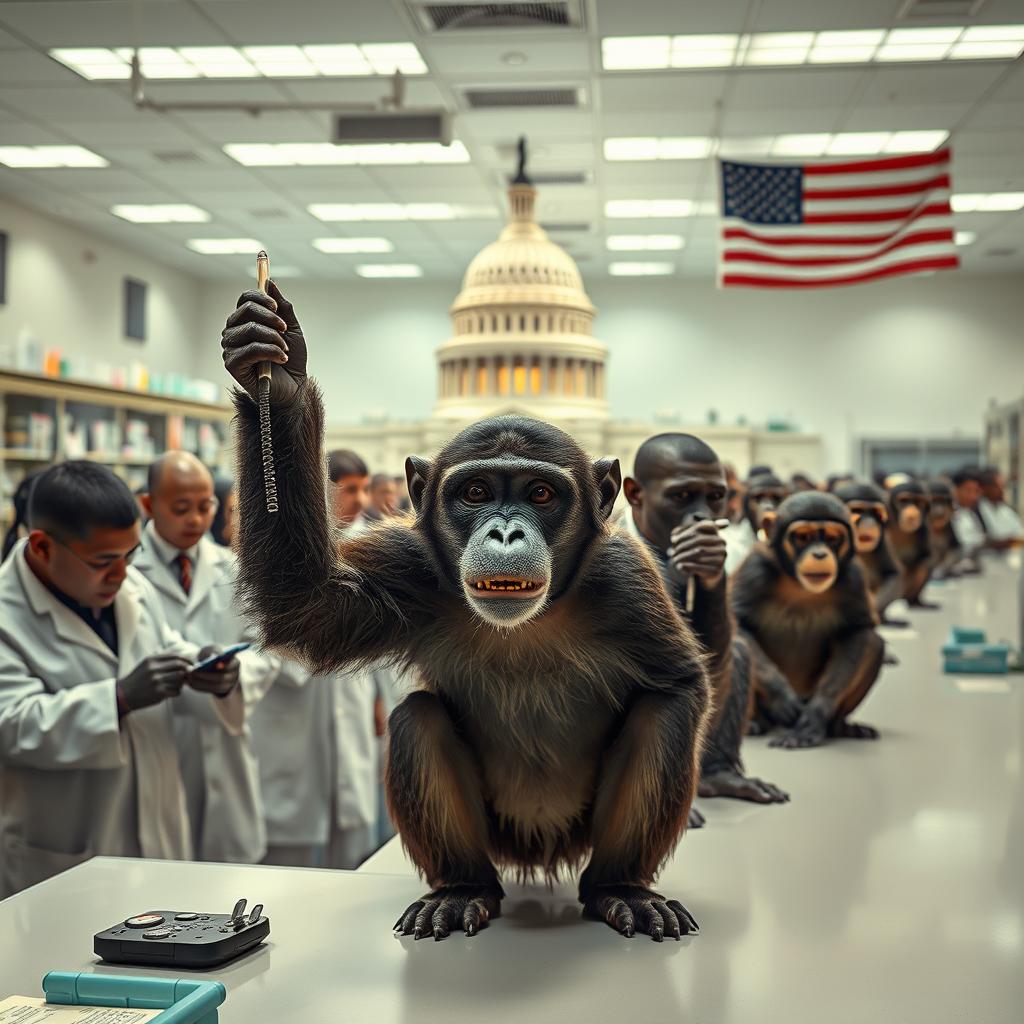
U.S. Representatives Greg Steube (Republican) and Dina Titus (Democrat) have introduced the 'PRIMATE Act (H.R. 8471),' which would completely ban the import of non-human primates (NHPs) for research purposes. The bill aims to prevent the spread of deadly pathogens such as tuberculosis and Herpes B by cutting off the supply of approximately 20,000 NHPs annually. Violators will face fines of $50,000 per incident, forcing immediate changes in research environments that rely on imports.
Impact on the Non-Clinical CRO Industry's Supply Chain and Finances
The bill will place a significant financial burden on non-clinical contract research organizations (CROs) such as Charles River Laboratories (CRL) and Inotiv (NOTVQ), which recently filed for bankruptcy protection. In the global non-clinical CRO market, which is expected to reach $11.51 billion by 2026, an imbalance in the supply of primates will lead to soaring prices for toxicity testing. In the short term, the cost of acquiring monkeys will increase, eroding CRO profit margins and potentially increasing the cost of early-stage pipeline development for pharmaceutical companies.
FDA's Push for Animal Experiment Alternatives and the Introduction of New Evaluation Methods
This regulatory trend aligns with the U.S. Food and Drug Administration (FDA)'s efforts to promote alternative testing methods (New Approach Methodologies, NAMs). The FDA has already established criteria in April 2025 to exclude animal testing in clinical trials for monoclonal antibodies (mAbs), and in March of this year, the Center for Drug Evaluation and Research (CDER) released guidelines on the use of data from human induced pluripotent stem cells (iPSCs) and organ-on-a-chip technology. The National Institutes of Health (NIH) is also investing $150 million in research on alternative methods, further driving the paradigm shift.
Limitations of Animal Alternatives and Concerns about Delayed Clinical Entry
However, there is also a cautious view that it will be difficult to replace primate experiments overnight. Steven Bulera, Ph.D., of Charles River, pointed out that the transition to alternative testing methods will be a gradual evolutionary process. In areas such as cancer and neurological diseases, where immune responses and complex drug metabolism are critical, the reliability of alternative technologies must be verified, which will inevitably delay the entry into early clinical trials. This will pose a significant regulatory risk of development delays for pharmaceutical companies.
Biotech Companies' Diversification Strategies and Changes in the Investment Market
Biotech companies need to quickly develop contingency plans, such as diversifying primate import sources or securing alternative routes through Europe and Asia. In the long term, they need to strengthen partnerships with companies that have organoids or AI-based toxicity prediction technologies to reduce their reliance on primates in order to survive. In the process of restructuring the non-clinical ecosystem, companies with advanced animal alternative testing platforms are expected to gain a significant advantage in attracting venture capital (VC) investment.
The PRIMATE Act (H.R. 8471), which would ban approximately 20,000 non-human primate imports annually in the United States, is a catalyst that will directly increase the cost of non-clinical toxicity testing. With the global non-clinical CRO market expected to reach $11.51 billion by 2026, this bill will put significant short-term pressure on the cost competitiveness and operating margins of industry leaders such as Charles River (CRL) and Inotiv (NOTVQ), which is currently under bankruptcy protection. In the medium to long term, it will significantly stimulate the commercialization of technologies such as organoids and organ-on-a-chip, which will replace existing primate models in IND applications and early-stage Phase 1 clinical trials. Researchers will need to validate animal experiment alternatives (NAMs) data using the NIH's $150 million research budget in order to pass the regulations, and for investors, companies with alternative platform technologies will become a structural turning point in their major investment portfolios. This trend is expected to accelerate the restructuring of the market share of traditional non-clinical CROs and the growth of new alternative platform developers.
Source: FierceBiotech (rss)
https://www.fiercebiotech.com/cro/bipartisan-primate-act-would-end-non-human-primate-imports-us-labs