Genmab (GMAB) invests $32.6 million in Middlesex County to expand its headquarters for the commercialization of Epcoritamab
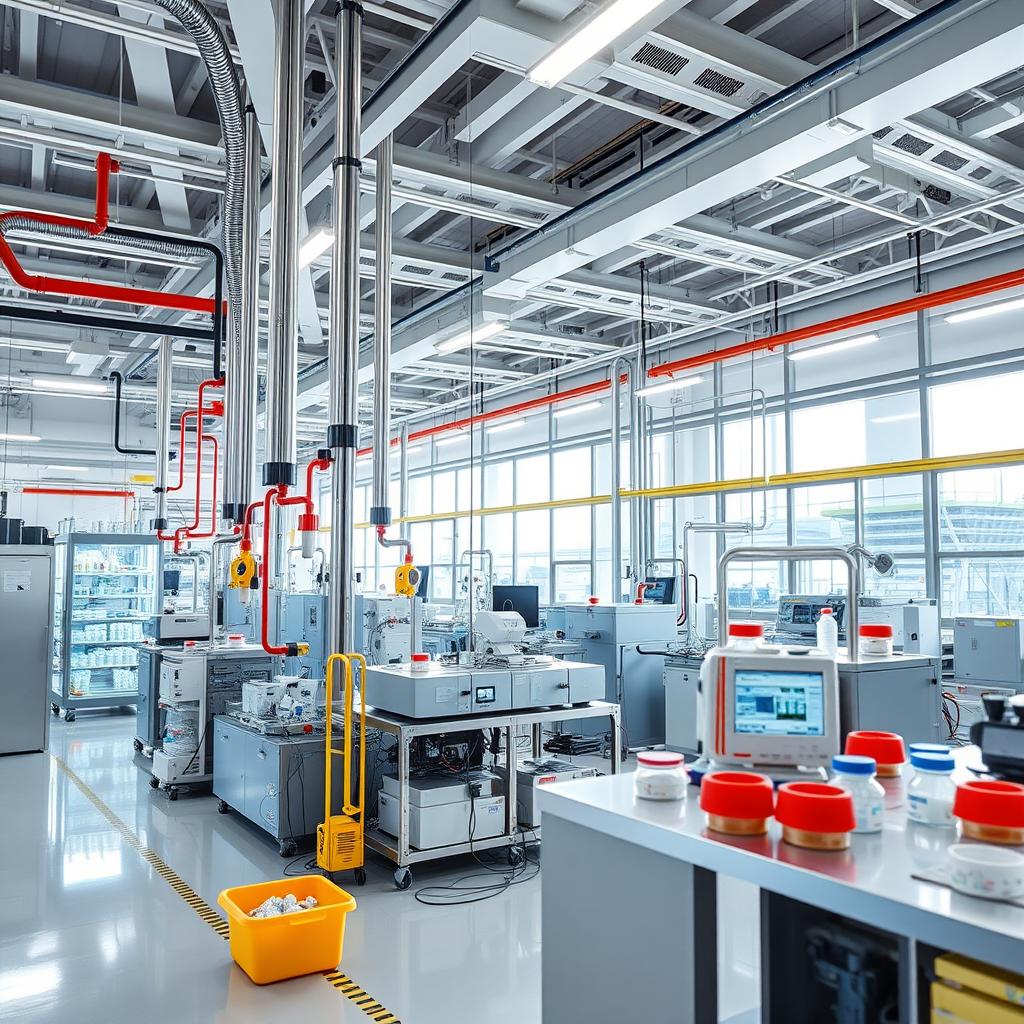
Global Capacity Shortage and Logistical Bottlenecks in the Biopharmaceutical Industry
The rapid growth of the advanced biopharmaceutical market, including Cell and Gene Therapy (CGT), has intensified the global shortage of Current Good Manufacturing Practice (cGMP)-certified production facilities. Traditional bio-clusters, such as Boston and San Francisco, are facing saturation due to limited space, rising rental costs, and severe competition for skilled labor. This has led to bottlenecks in the production of clinical trial materials and commercial products, delaying their timely availability and negatively impacting the time-to-market for new drugs. Consequently, companies are prioritizing the establishment of alternative locations that can be quickly operationalized, rather than solely focusing on reducing production costs.
Economic Value of 'Ready-now' Location Strategies
Instead of building new facilities from scratch (greenfield approach), companies are increasingly focusing on 'ready-now' locations that can utilize existing infrastructure quickly. Selecting locations with proven HVAC systems and established cold-chain logistics infrastructure can significantly reduce the time required to start production, from years to months. Experts estimate that this location strategy can reduce initial capital expenditure (CapEx) and subsequent scale-up costs by an average of 30%. This, in turn, can lead to lower prices for innovative therapies, improving patient access and creating a positive feedback loop.
Middlesex County's Dense Bio Ecosystem and Talent Pool
Middlesex County, New Jersey, is emerging as a prominent 'ready-now' bio-ecosystem hub, attracting significant interest from companies. The region boasts a pharmaceutical manufacturing workforce density seven times higher than the U.S. average and benefits from a continuous supply of skilled scientific talent from prestigious universities such as Rutgers University and Princeton University. Furthermore, the presence of Johnson & Johnson's headquarters and the $750 million HELIX Innovation District fosters a collaborative network between research institutions and Contract Development and Manufacturing Organizations (CDMOs). This dense ecosystem provides a crucial competitive advantage for early-stage biotech companies by eliminating initial entry barriers.
Genmab's $32.6 Million New Jersey Headquarters Expansion
Genmab (GMAB), a global leader in bispecific antibody therapies based in Denmark, has invested $32.6 million (approximately $43 billion KRW) to double the size of its headquarters in Plainsboro, Middlesex County, to 270,000 square feet. This decision was made to accelerate the global commercialization of Epcoritamab (Epkinly), a CD3 and CD20-targeting bispecific antibody therapy co-developed with AbbVie. As part of this process, Genmab secured tax benefits of up to $8.4 million over seven years through the New Jersey Economic Development Authority's (NJEDA) 'Emerge Program,' effectively mitigating initial cost challenges. This is a prime example of how a combination of government incentives and excellent research infrastructure can enable rapid scale-up for global biotech companies.
Future Scenarios Driven by the Diversification of Bio Clusters
The regional shift in biopharmaceutical production, driven by the saturation of traditional hubs, is expected to reshape the global pharmaceutical and biotechnology industry. Companies that remain anchored in existing clusters will face excessive fixed costs and the risk of talent attrition, while those that proactively invest in emerging hubs will maximize production flexibility and gain a competitive edge. If other state governments offer similar tax incentives and customized talent development programs, competition among bio clusters will intensify. Ultimately, companies that can rapidly internalize manufacturing capabilities and control supply chain risks will be the ultimate winners in the next generation of targeted therapy markets.
Biopharmaceutical companies can reduce factory construction time by more than several years and lower initial capital expenditure (CapEx) by approximately 30% by adopting 'ready-now' location strategies in areas like Middlesex County, New Jersey. Genmab's (GMAB) $32.6 million investment in expanding its New Jersey headquarters is a strategic move to maximize the speed of global commercialization for its CD3xCD20 bispecific antibody, 'Epcoritamab (Epkinly).' This will provide a crucial competitive advantage in terms of supply stability and distribution efficiency in the race to capture market share in the bispecific antibody lymphoma market against competing drugs such as Roche's Columvi and Lunsumio. Combined with tax benefits of up to $8.4 million over seven years, this investment minimizes financial risk and enhances capital efficiency, positioning Genmab for stable growth in the approximately $10 billion global non-Hodgkin lymphoma market. In the long term, the company's connection with local infrastructure, including Princeton and Rutgers universities, will provide a dense R&D ecosystem for cell and gene therapy researchers, further accelerating the clinical development of next-generation cancer therapies.
Source: BioPharma Dive (rss)
https://www.biopharmadive.com/spons/the-capacity-crunch-in-biopharma-is-a-location-problem/819159/