Sanofi and Regeneron's Dupixent strengthens its market dominance with FDA approval.
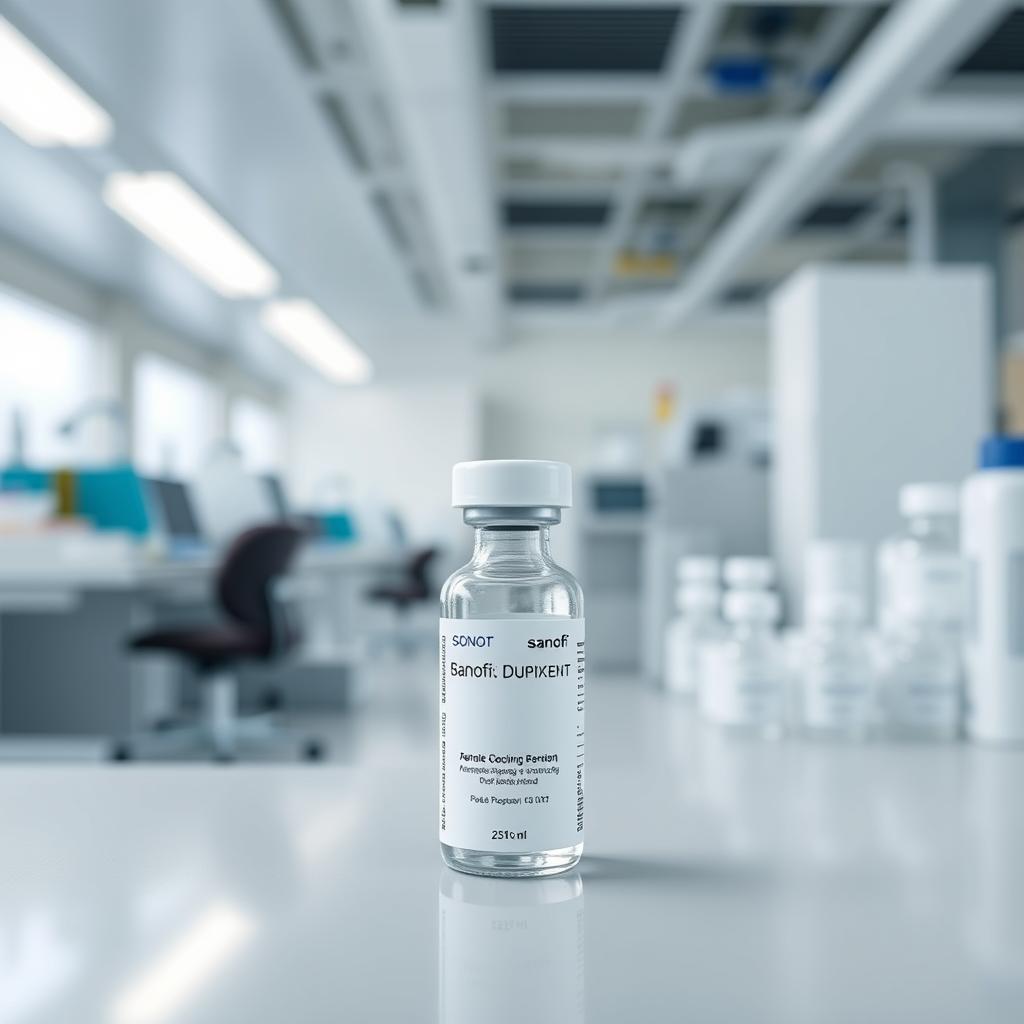
A New Paradigm in Atopic Dermatitis Treatment
Dupixent (dupilumab), co-developed by Sanofi and Regeneron, received its first marketing authorization (BLA 761055) from the FDA in March 2017 for the treatment of adult patients with moderate-to-severe atopic dermatitis. It is the first monoclonal antibody therapy that selectively blocks the type 2 inflammation pathway, the underlying cause of atopic dermatitis, by targeting interleukin-4 receptor alpha (IL-4Rα), a key signaling molecule in the immune system. Unlike conventional broad-spectrum immunosuppressants, its targeted approach enables improved safety and significant skin improvement in patients. Thanks to this innovative mechanism, Dupixent has rapidly established itself as a standard of care in the dermatology market, where there was a high unmet medical need.
Maximizing Pipeline Value Through Expansion of Indications
Since its initial approval, Sanofi has continuously expanded the indications for Dupixent, based on clinical data, to include not only pediatric patients with atopic dermatitis but also various other type 2 inflammatory diseases such as asthma, chronic rhinosinusitis with nasal polyps (CRSwNP), eosinophilic esophagitis (EoE), and prurigo nodularis. Most recently, positive Phase 3 clinical results have been obtained in the area of chronic obstructive pulmonary disease (COPD), transforming the landscape of the respiratory treatment market. With each additional indication, the potential patient population increases exponentially, making it one of the most effective strategies for securing the company's long-term growth. This multi-indication strategy, which targets multiple diseases with a single drug, can be considered a model case for maximizing return on investment (ROI) in research and development (R&D).
Strategic Co-development Synergy Between Sanofi and Regeneron
Behind the commercial success of Dupixent lies a solid partnership in the form of a co-development agreement (License and Collaboration Agreement) signed between Sanofi and Regeneron in 2007. The two companies share profits and losses in the U.S. market on a 50:50 basis, and in other regions, a sliding scale is applied, with Sanofi receiving up to 65% of the profits. In the early co-development phase, Sanofi paid an upfront fee of $85 million and proactively covered most of the development costs, enabling Regeneron's technological potential to be rapidly commercialized. This division of roles between a major pharmaceutical company and a biotech venture is considered an ideal model for collaboration, as it diversifies the risks of new drug development and maximizes the speed of global commercialization.
A Blockbuster Drug Exceeding $10 Billion in Annual Sales
In 2023, Dupixent recorded global sales of approximately €11.6 billion (over $12 billion), becoming a key pillar of Sanofi's overall pharmaceutical sales. While competing drugs such as Adbry (tralokinumab) from LEO Pharma and Cibinqo (abrocitinib) from Pfizer have entered the market, they have been unable to overcome Dupixent's strong clinical data and first-to-market advantage. In particular, it has a unique advantage in long-term safety data, and its penetration rate in pediatric and adolescent patients continues to increase. This overwhelming sales growth is improving Sanofi's cash flow and providing a solid financial base for reinvestment in next-generation biopharmaceutical pipelines.
Dupixent (dupilumab) surpassed $12 billion in global sales in 2023, serving as a key cash cow for Sanofi and Regeneron, and further sales growth is expected following the recent success of its Phase 3 clinical trial for chronic obstructive pulmonary disease (COPD). Amidst the slow market entry of competing drugs such as Adbry (tralokinumab) from LEO Pharma and Cibinqo (abrocitinib) from Pfizer, Dupixent is expected to maintain its market dominance based on its broad range of indications, from pediatric atopic dermatitis to severe asthma, and its seven years of prescription data. The 50:50 profit-sharing structure in the U.S., established in the 2007 agreement between the two companies, enhances Regeneron's financial independence while solidifying Sanofi's position as a global leader in immunology, creating a win-win outcome. For researchers and employees in the field of immunology and biotechnology, Dupixent's IL-4Rα targeting mechanism has become a global standard reference for the development of therapies for type 2 inflammatory diseases, and it has served as a catalyst for raising the bar for clinical approval of similar pipeline drugs.
Source: openFDA (api_fda)
https://www.accessdata.fda.gov/scripts/cder/daf/index.cfm?event=overview.process&ApplNo=BLA761055