FDA Announces Official Communication Channels and ISTAND Program Guidelines for AI-Driven Drug Development Platforms
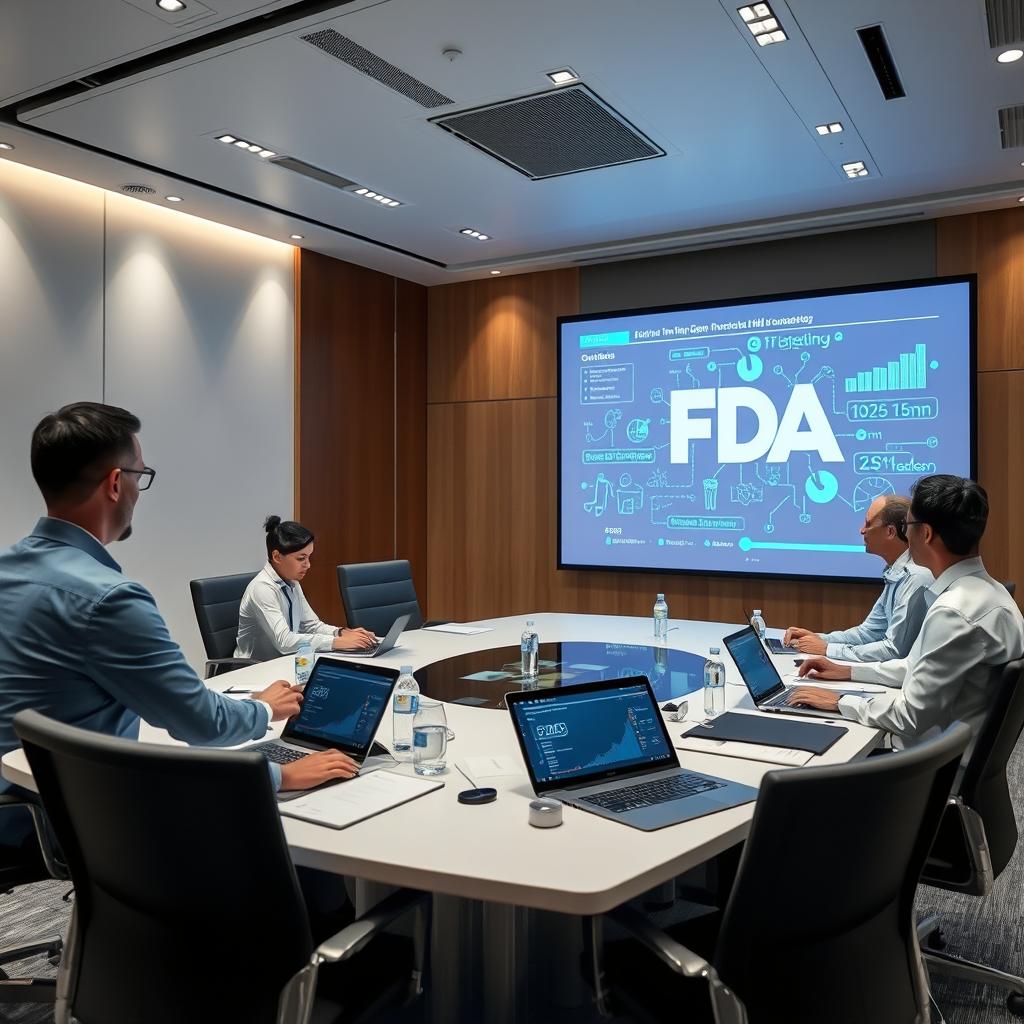
Background on the Establishment of FDA's Official Communication Channels for AI-Driven Drug Development
TheU.S. Food and Drug Administration (FDA) has announced guidelines outlining official pathways for requesting meetings regarding drug development programs utilizing artificial intelligence (AI) and machine learning (ML) technologies. This move comes as the global AI-driven drug development market is projected to grow from approximately $3.8 billion in 2025 to as much as $44 billion by the mid-2030s, with an annual growth rate of double digits. This rapid growth has highlighted the need for proactive coordination with regulatory authorities. Sponsor companies can now mitigate regulatory uncertainties by engaging in formal meetings, starting from the pre-Investigational New Drug (Pre-IND) stage and continuing through the application process. This reflects the FDA's commitment to accelerating the validation of complex AI algorithms and ensuring compliance with regulatory requirements.
Diversification of ISTAND and CID Channels for Innovative Drug Tools
In addition to general formal meetings, these guidelines introduce a range of communication channels for early validation of innovative technologies. Specifically, the 'Innovative New Drug Development Tool (ISTAND)' pilot program, designed for assessing the eligibility of drug development tools (DDTs), and the 'Complex Innovative Clinical Trial Design (CID)' meeting program are highlighted as key communication channels. For example, in January 2024, Deliberate AI's mental health assessment tool became the first in the neuroscience field to be included in ISTAND, and in June 2026, a digital liver model for toxicity prediction received new approval. These dedicated tracks are designed to facilitate the rapid regulatory approval of AI platforms, moving beyond traditional, rigid approval pathways.
Market Competition and Regulatory Advantages for AI-Driven Drug Platforms
The announcement of these guidelines provides companies like Recursion Pharmaceuticals (RXRX) and Schrödinger (SDGR), leaders in AI-driven drug development, with an opportunity to gain a regulatory advantage. As platforms that can significantly shorten development timelines and reduce failure rates compared to standard treatments gain recognition, these companies are well-positioned to secure favorable terms in licensing deals with large pharmaceutical companies. Companies that proactively establish early communication channels with the FDA will be better able to optimize clinical trial design and gain a competitive edge. As a result, these guidelines are likely to have a positive impact on the corporate value and market share of publicly traded companies with AI platform technologies.
Addressing the Challenges of Algorithm Transparency and Global Regulatory Harmonization
However, investors and developers should be aware that significant technical challenges remain, including the validation of AI models and the need to address issues related to the transparency and bias of training data. The FDA will require the submission of detailed validation data to ensure the implementation of explainable AI (XAI) and data traceability, which may increase development costs. It is also important to monitor global regulatory harmonization efforts, such as the 'Good AI Practice' principles jointly announced by the FDA and the European Medicines Agency (EMA) in early 2026. In the short term, establishing a credibility plan and enhancing internal control systems are essential to minimize the risk of delays in drug approvals.
The global AI-driven drug development market is a promising sector, projected to grow from approximately $3.8 billion in 2025 to as much as $44 billion by the mid-2030s, with an annual growth rate of double digits. The finalization of these FDA guidelines provides a short-term milestone for AI platform companies like Recursion Pharmaceuticals (RXRX), allowing them to proactively mitigate the risk of regulatory approval delays through formal meetings starting from the Pre-IND stage. In the medium to long term, we can expect a significant increase in the number of visible AI-based clinical trials and commercial approvals, as demonstrated by the ISTAND approval obtained by Deliberate AI's digital diagnostic tool. From the perspective of researchers and development professionals, there will be a surge in demand for specialized research and development personnel to validate algorithms and meet the requirements for explainable AI data. Therefore, it is anticipated that the global pharmaceutical market will be reshaped, with leading companies that have established efficient new drug pipeline development and reliable platform technology validation systems gaining a dominant position.