💡필독
근육 재프로그래밍으로 말초 신경 손상 회복 혁신
Experimental biology and medicine (Maywood, N.J.)·2026년 3월 28일AI 큐레이션
✨AI 요약 (Beta)Beta
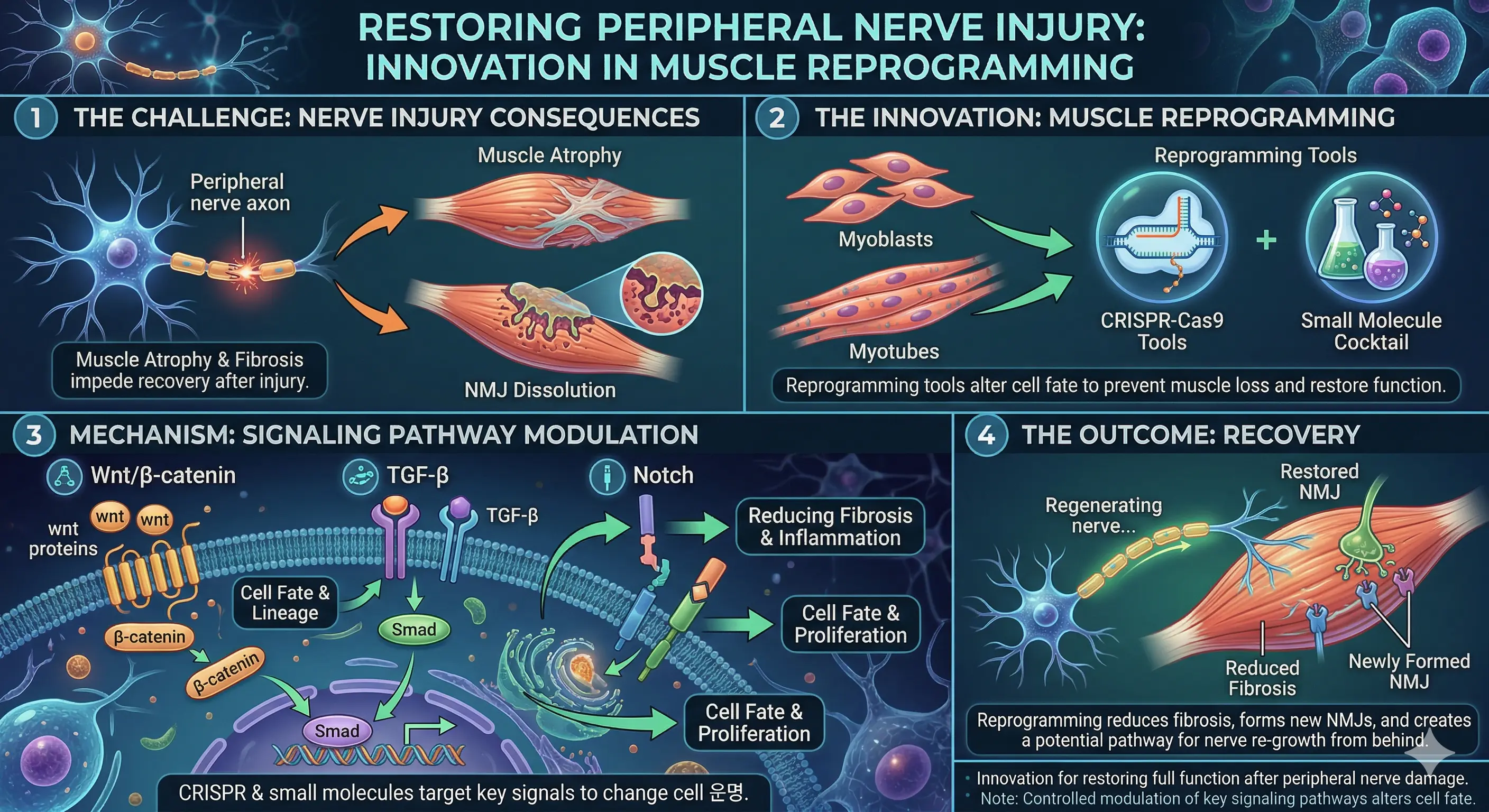
말초 신경 손상 후 근육이 위축되고 섬유화돼서 회복이 힘든데, 근육 세포를 재프로그래밍하면 근육 손실을 막고 섬유화도 늦추고 NMJ도 다시 만들 수 있어요.
Wnt/β-catenin, TGF-β, Notch 같은 신호를 조절하거나 CRISPR와 작은 분자 혼합물로 세포 운명을 바꾸는 거죠.
이렇게 하면 손상된 신경도 뒤에서 다시 자라날 가능성이 생겨요.
Peripheral nerve injury (PNI) presents a significant clinical challenge, frequently leading to long-term neuromuscular dysfunction, muscle atrophy, fibrosis, and chronic pain. Traditional repair strategies, including microsurgical reconnection and neurotrophic support, often yield limited functional recovery, especially in cases of delayed or incomplete reinnervation. In this context, skeletal muscle reprogramming-defined as the intentional modulation of cellular fate, function, or metabolic state in muscle-resident cells-has emerged as a promising strategy to enhance regenerative outcomes. This process involves transcriptional, epigenetic, and metabolic interventions targeting myogenic progenitors, fibro-adipogenic progenitors (FAPs), satellite cells (MuSCs), and the broader muscle microenvironment. Recent studies demonstrate that reprogramming strategies can mitigate denervation-induced muscle atrophy, delay fibrotic remodeling, promote neuromuscular junction (NMJ) reconstruction, and even stimulate endogenous nerve regrowth via retrograde signaling. Mechanistic insights have uncovered pivotal roles for signaling pathways such as Wnt/β-catenin, TGF-β, Notch, and HDAC-regulated chromatin dynamics. Furthermore, innovations in small molecule cocktails, CRISPR-based transcriptional reactivation, and metabolic rewiring have expanded the therapeutic toolkit for muscle preservation and regeneration. This review comprehensively examines the molecular mechanisms, therapeutic roles, and translational challenges of skeletal muscle reprogramming in the context of PNI. We explore how muscle-targeted interventions can address complications of denervation, improve the efficacy of nerve repair, and offer a synergistic axis of regeneration when integrated with nerve-centric strategies. Finally, we identify key knowledge gaps and outline future research directions required to translate reprogramming-based therapies into clinical practice.
💬왜 중요하냐면:
근육 보존·재생으로 신경 손상 환자 회복 가능성이 크게 늘어남
💬 댓글
0개의 댓글댓글을 작성하려면 로그인이 필요합니다
로딩 중...